
A 4–10 m³ pump-fed pond
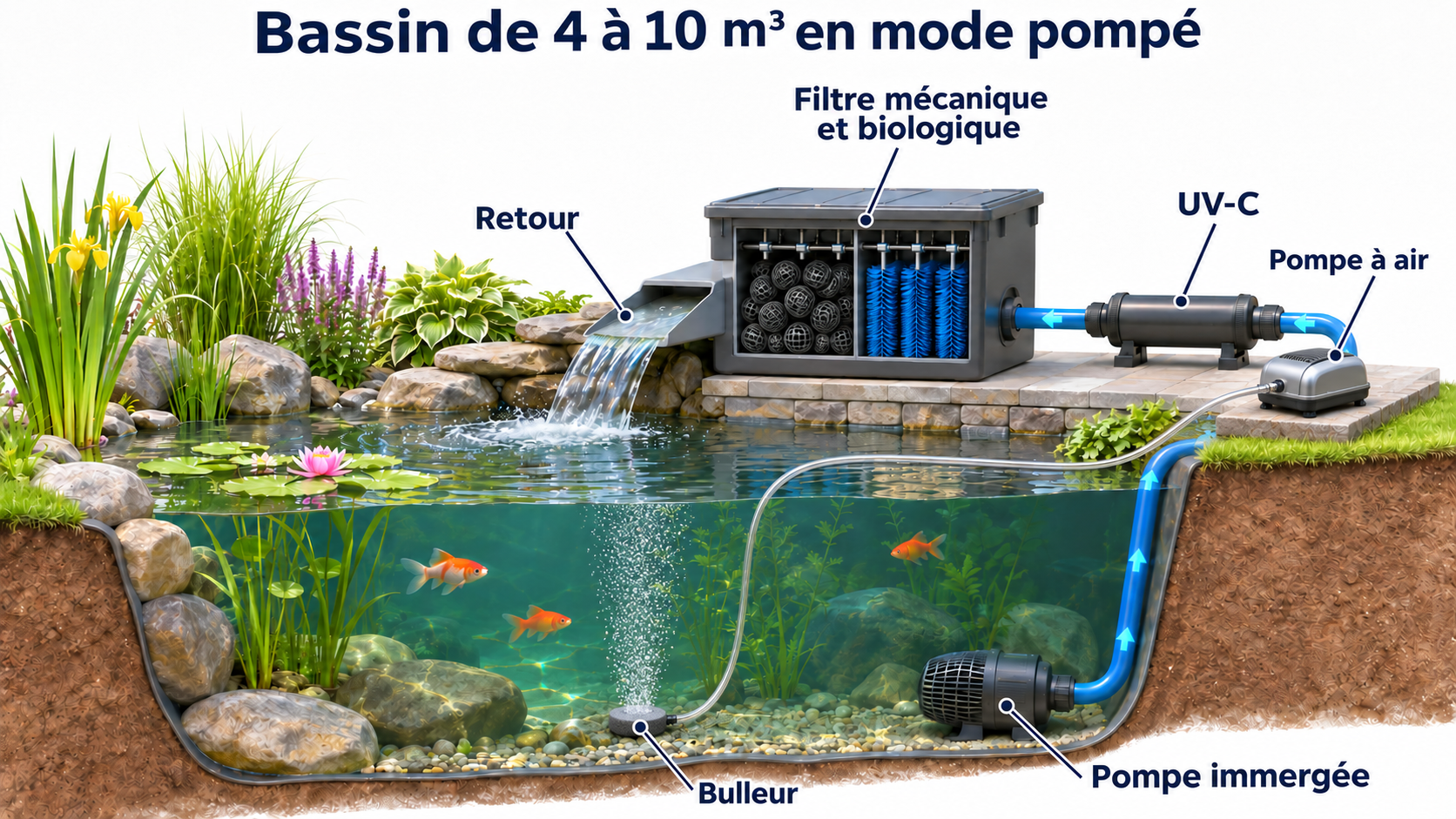
In this example, the submerged pump sends water to UV-C and then to the filter. The water first passes through the brushes, which retain waste, then bio-balls, which serve as a support for the bacteria of the filter. It returns to the pond by cascade.
Equipment required
- A pond sheet, preferably in EPDM, with a protective felt (calculate the dimensions of the sheet), or a suitable preformed pond.
- A submerged pump for filtration. For a pond of 4 to 10 m³, provide a real flow rate of 2 to 5 m³/h at the inlet of the filter, i.e. half the volume of the pond per hour. Choose the pump taking into account the head loss and the discharge height.
- A UV-C device adapted to the volume of the pond and the flow through it.
- A mechanical and biological filter adapted to the pond and its fish population, with brushes followed by bio-balls.
- An air pump, an air hose and a bubbler. Place the air pump above water level in the shelter in accordance with its instructions.
- Traffic pipes, fittings, collars and valves suitable for equipment.
- A return of water to the pond, here in the form of a small waterfall.
- Ecolat borders and Ecopic pickets to realize and maintain the contours of the pond: estimate the length of School and the number of Ecopic pickets.
- A stable and level support for the filter and external equipment.
Possible improvement
Replace bio-balls with Japanese filter matting or, better yet, Mountain Trees.
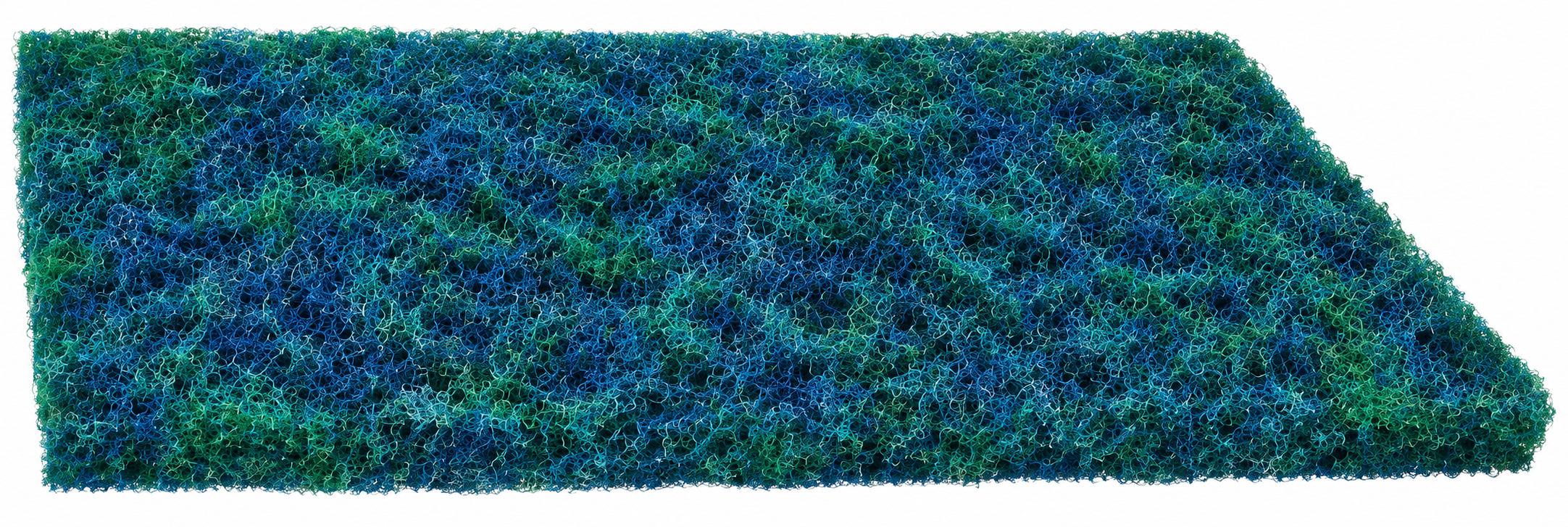
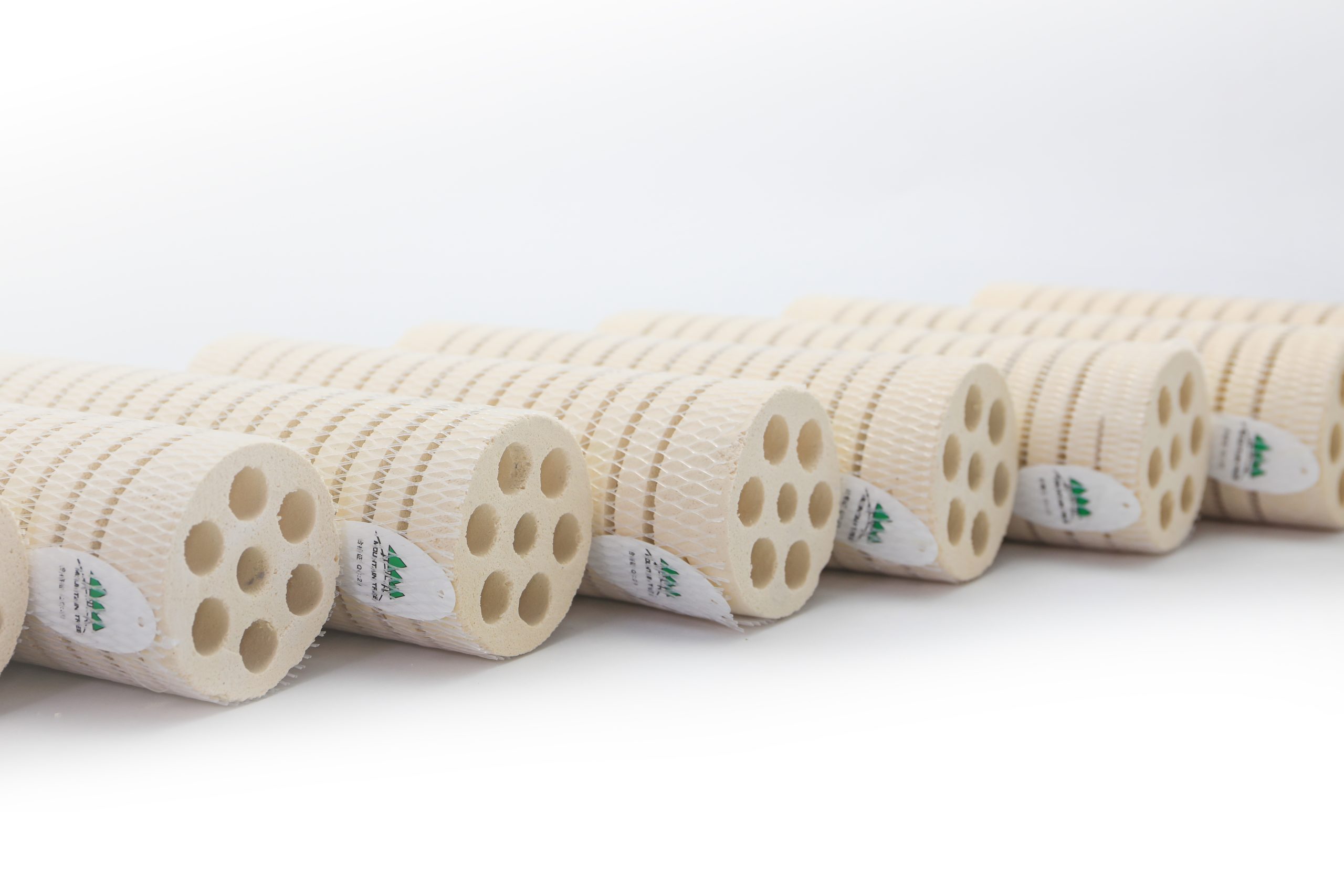
Photo: Mountain Tree