
What is a biological filter made of?
The answer is simple: it consists of a container and a container or, if you prefer, a filter mediat.
There are five types of biological filters:
- Static filters or, as their name indicates, filter media do not move;
- The Moving bed in which the filter media are in perpetual motion;
- Anoxic filter, a variant rarely used in garden ponds;
- More amazing, the pond itself;
- Finally, mechanical and biological handsets.

Note on filter media
All filter media will eventually colonize itself, it is part of the order and disorder of the universe. Indeed, any element ends up disaggregating one day. It remains to be known how long this phenomenon will take.
As far as filtration media are concerned, we are looking for a mediat that will colonize quickly in order to degrade the organic matter of the pond, with the aim of accelerating the nitrogen cycle to the maximum.
Indeed, as we have seen in the nitrogen cycle, the first two stages of this cycle are toxic or very toxic to fish that may die in the event of an extreme situation.
When the media are colonized, you might think it's over.
As in the case of treatment after the parasites appear, or following a bacterial attack, depending on the type of treatment, you can partially or totally kill your bacteria colonies. In this case, you may also destroy your filter, and your fish at the same time!
The bacteria in your filter are essential to the proper functioning of your filtration and to the good health of your fish.
I will present you with a solution to this problem.
Of course, we are not trying to disintegrate the minerals that would inadvertently slip into filtration!
It must be noted that the choice of filter media is very important for the proper functioning of your pond because it must be able to colonize quickly and, by definition, be as energy-efficient as possible.
Warning
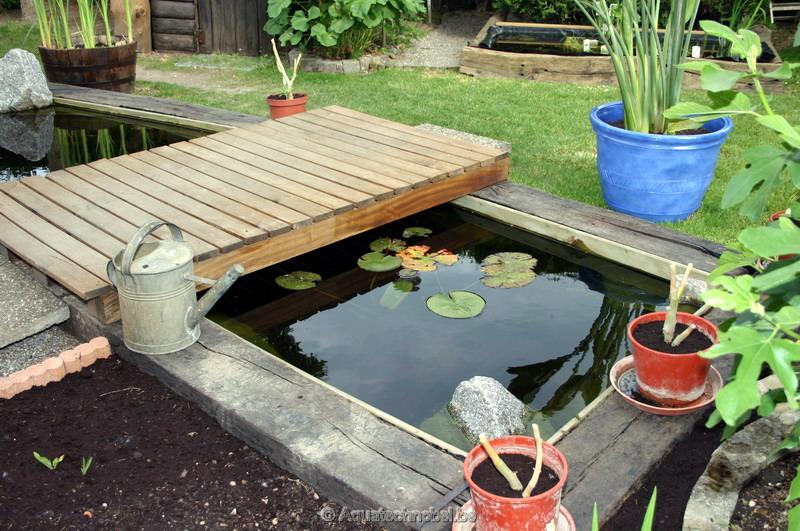
As I said at the beginning, all the media eventually settle down, the first being the pond itself!
A pond is a natural environment and it must be accepted that it contains algae.
You must know that an algae-free pond is a sick pond!
Therefore, do not clean the bottom with hard brushes, so you will avoid removing the biofilm that has been created. This is an important part of your filtration.
That said, you can suck the waste in surplus but, above all, do not try to give a new look to your tarpaulin or polyester because you would make a serious mistake!
With subfiltration, a pond can behave perfectly for, sometimes, several years in a row without you encounter any specific problem.
However you should know that the situation will certainly deteriorate for your fish. Inevitably, with the time or subsequent additions of new residents, you will encounter problems.
It does not take much to break a balance, the simple growth of a tree close to the pond can change everything in its behavior.
Above all, pay close attention to the "advisors" whose pool has been working "without problems" for quite a while!
Usually, this kind of person won't tell when she's in trouble with her pool.
At first glance, a pond is simple to manage, yet complex problems can arise quickly.
Indeed, the maintenance of a pond requires you to take into account a series of important details, the first being to equip your pond with a well-sized and efficient filtration.
Static filter
There are two types of static filters:
- The filtration tank
- The shower filter or Trickle filter
The filtration tank
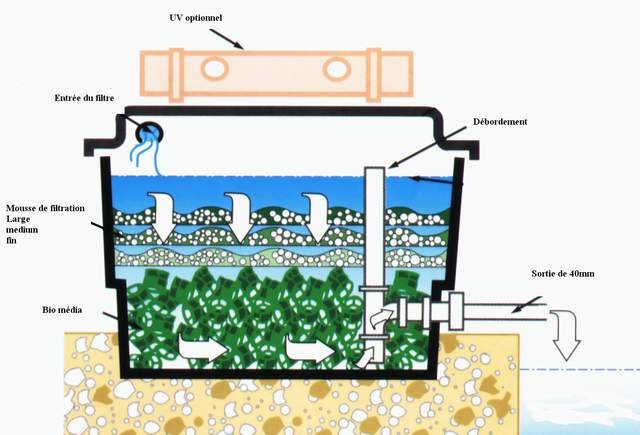
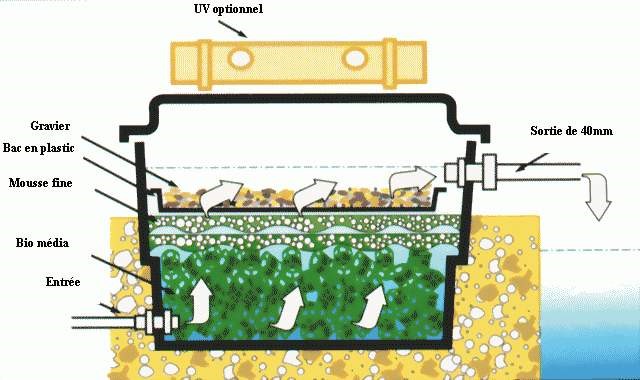
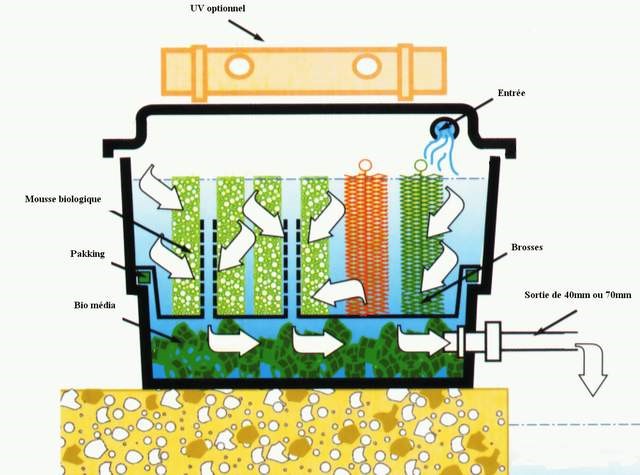
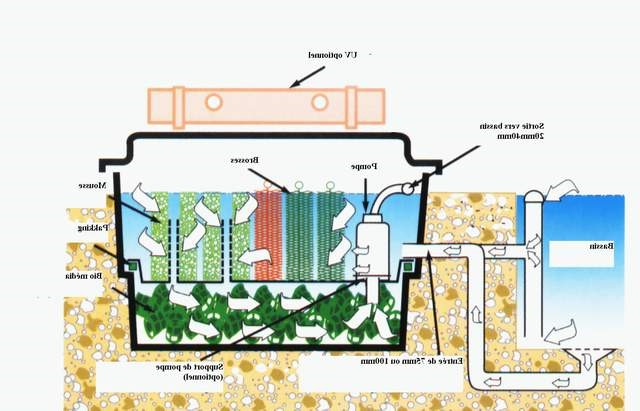
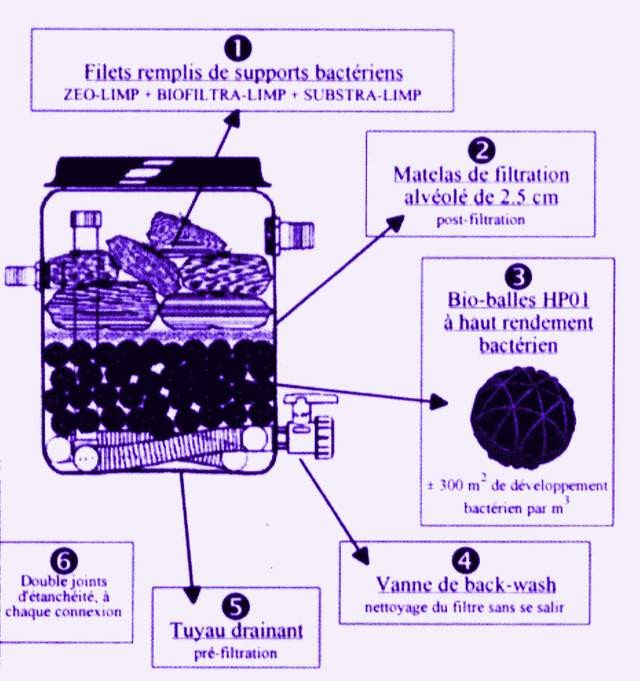
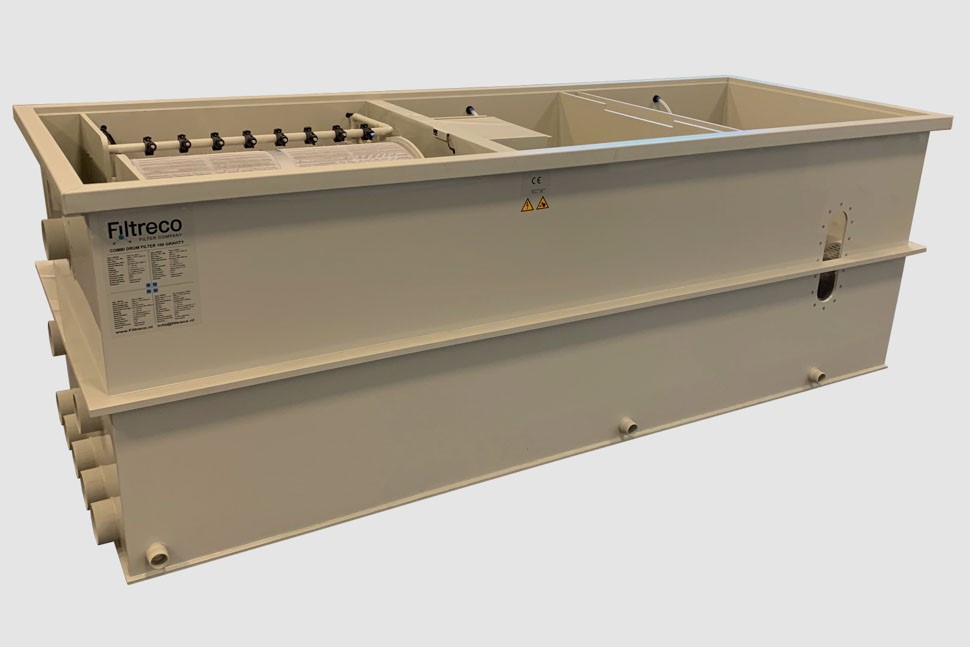
A simple tank can do the job. You will find all kinds of models on the market. The most common is the multi-chamber, as you can see in the example below.
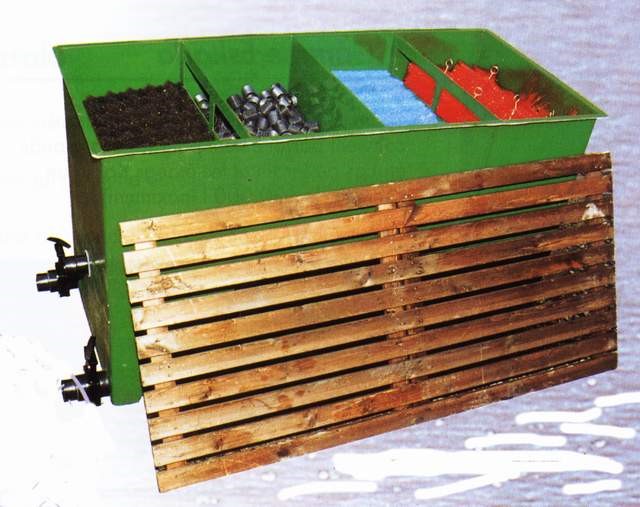
Often multi-chamber filters are made of polyester with low capacity in filter media.
Filtration media are bacterial media, so it is important to have a good capacity for this type of medium.
This type of tank must have purging valves, which are important for cleaning bacterial media. This type of filter can combine mechanical filtration made mainly from biological brushes and compartments.
In some cases, the grid filter will even be included in the price!
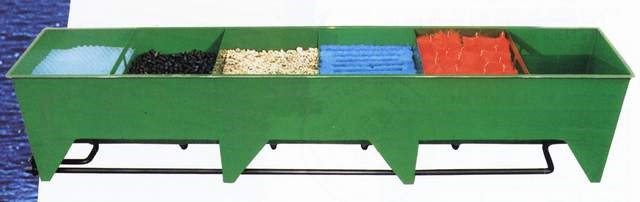
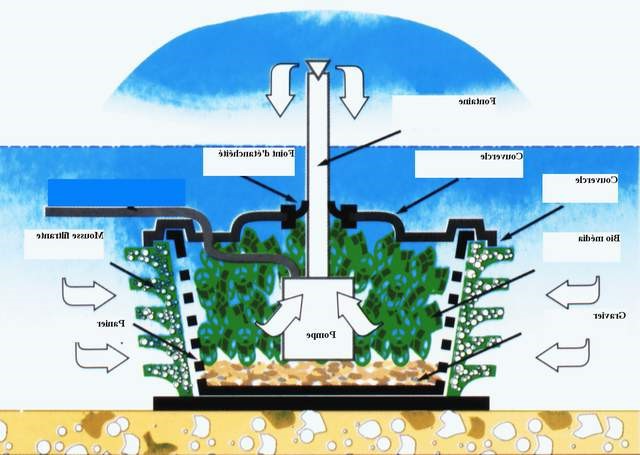
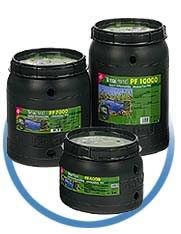
There are a lot of very small biological filters available; these can be suitable for very small ponds but, in no case, for koi-populated ponds (see examples below).
The can filter
I used the can filters for a long time. They had the inconvenience of blowing up when they were closing. This was due to the pressure of the pump!
The IBC tank Filter
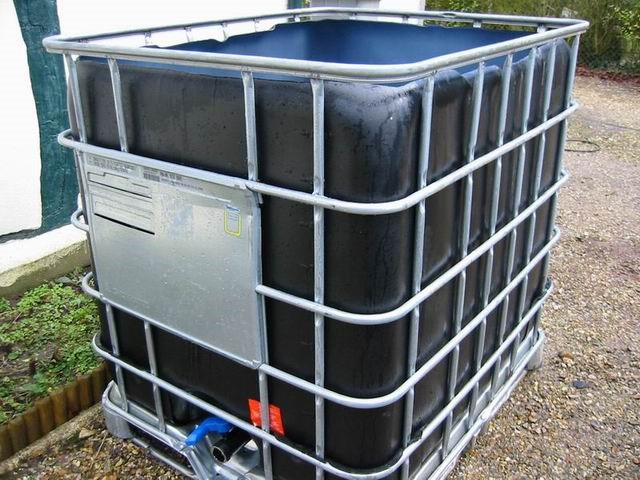
After careful reflection, I opted for the "IBC tank filter", more economical. This one is one of the musts, it has a capacity of 1000 litres. It can be suitable both in pumping mode and in gravitational mode. It is therefore ideal for tinkerers. This filter is available in one or several vats (s).
The shower filter or trickle filter
The shower filter is simple to design: a shower is created at the top of the vats and it sprays filter media.
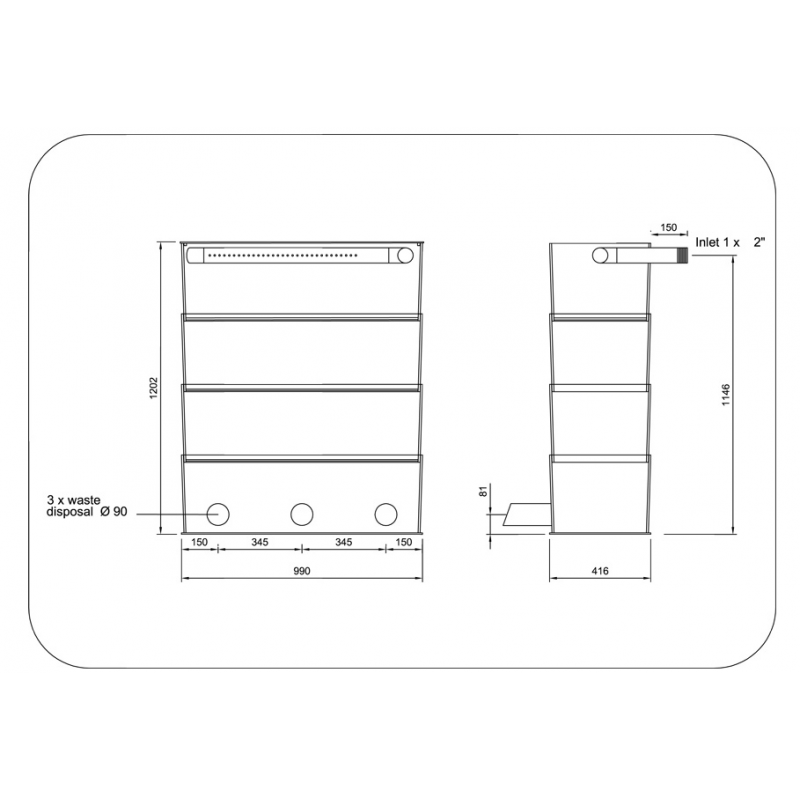
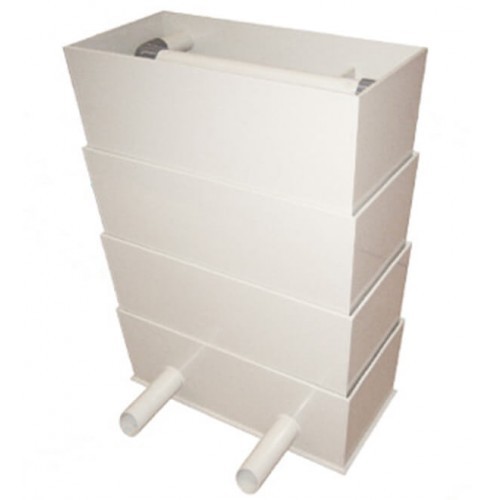
This type of biological filter has the drawbacks of being noisy and causing nitrate production. However, its effectiveness is formidable!
Ideally, it should be placed in a room to limit noise and avoid temperature variations, especially in spring and autumn.
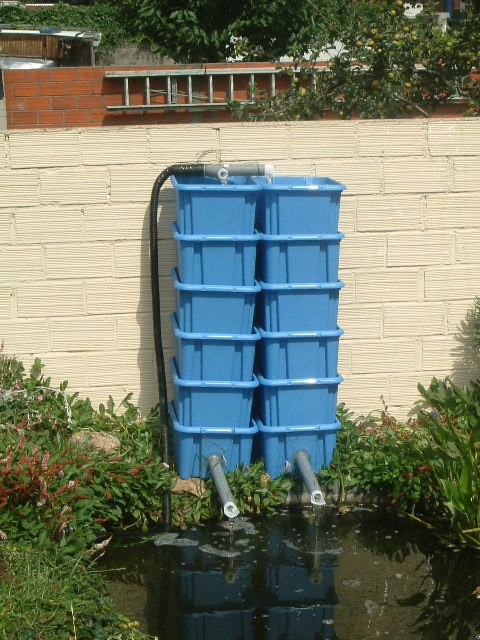
If you place it outside, it is advisable to stop it as soon as the night temperature passes below the 10°C bar. Otherwise, this type of filter will quickly cool your pool.
Another disadvantage: it is energy-consuming because it is necessary to climb water at its top.
The shower filter is available both in PP (polypropylene) and polyester. If you are a handyman, you can simply make it out of stainless steel using openwork cases.
The moving bed
The Organic Moving Bed Cuve is intended to host filter media such as Biocarrier KNS or ECOCOND CHIPS.
Installed after the meadow mechanical filtration, this biological filtration is perfectly suited to mate with the drum.
Once in water, an EPDM diffuser installed in the bottom of the tank allows the media to be oxygenated and put into motion by the air that is injected there.
The colonization of your filtration media will allow the degradation of ammonia and nitrites in an extremely effective way.
The only problem with this type of filter is its slow colonization!
Once colonized, it is a very good biological filter but, despite everything, before placing it, I advise you to place a tank of Japanese filter matting.
The combined filters
There are several kinds of filters combined:
- Multi-bedrooms
- The sand filter
- Smoker
- Low-pressure granular filters (BubblebBead Filter)
- The Beads filter
Multi-chambers combined
This type of filter combines both the mechanical filter and the multi-chamber.
It is often associated with a biological filter like Moving bed or Japanese filter matting.
In some versions, this type of filter can be used to filter very large ponds.
The sand filter
The sand filter is mainly used for swimming pools.
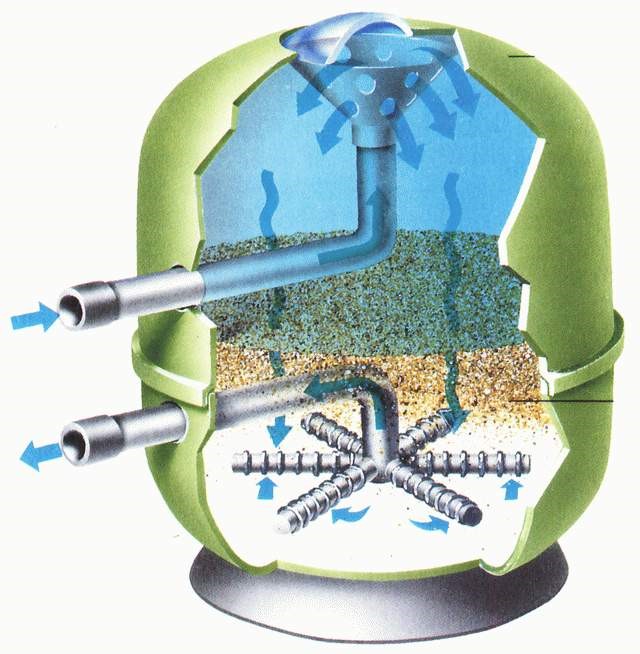
Some KOI enthusiasts use it to obtain a very clear water.
To do this, the sand filter can only be used from water already filtered, so it is placed after the main filter.
For experienced amateurs, it is the most ultra-fluid filter.
The principle lies in the fact that water entering the filter will create an overpressure on the inside (from 0.85 to 1 Kg/cm². This explains the installation of a pressure gauge above the bowl to be able to monitor the proper functioning of the filter.
The quartz sand then holds the small particles in suspension.
This filter can be a good complement in the range of filters to eliminate MES.
Smoker
The operating principle
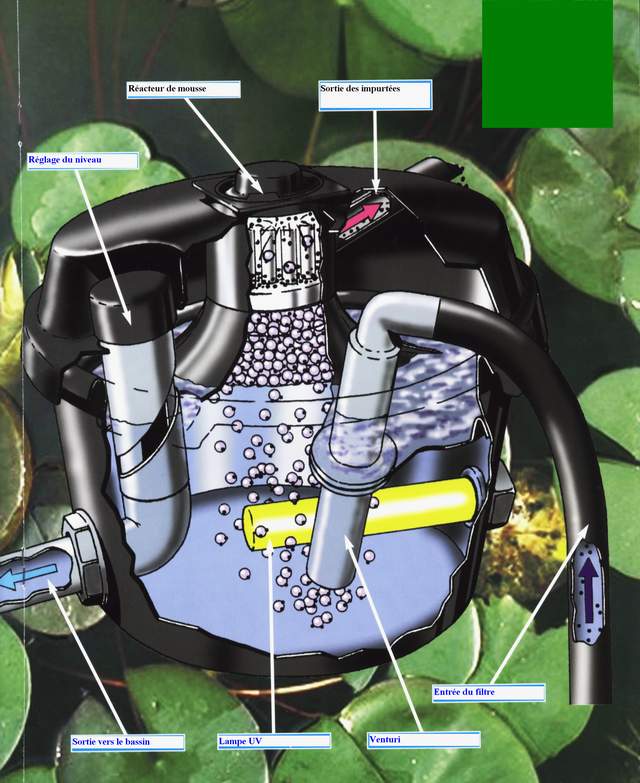
A pump takes the water into the tank. Then, an air injection is made by a venturi in the bottom of the tank. Above the tank, there is a series of small tubes through which the bubbles can pass by taking away impurities. The dirty water is thus evacuated.
This type of filter is often used in competitions to filter water from exposure bins.
This filter has the advantage of maintaining a significant oxygenation of water. Moreover, it works without chemicals or filtering materials. Maintenance is almost zero!
UV can be incorporated in order to multiply the beneficial effects of the system.
Good to know:
Water extracted from the filter is excellent for watering plants. So, if you use this type of filter, get it back absolutely.
There are two filters of this type on the market:
A 20-litre tank that must be powered by a 1500 l/h pump and injects 2000 l/h of air into the water.
A 65-litre tank that must be powered by a 3000 l/h pump and injects 3500 l/h of air into the water.
Tip: The pump performance requirement must be higher than indicated, as a result of pressure losses at the air suction level.
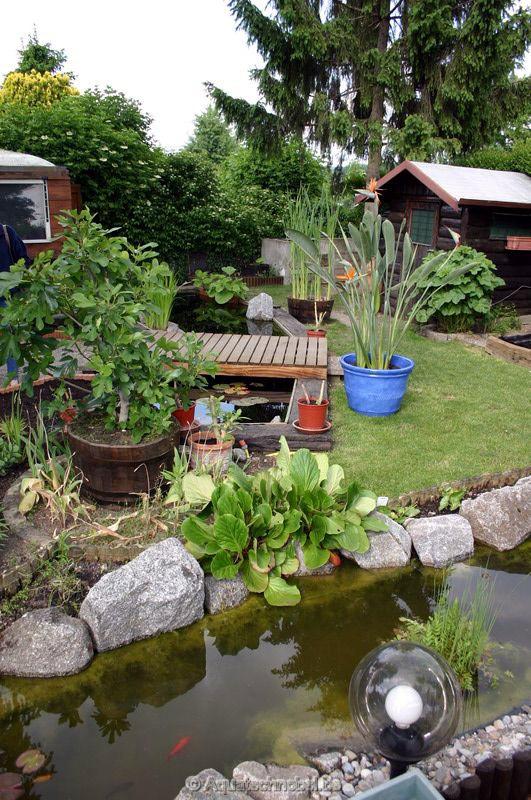
The pond
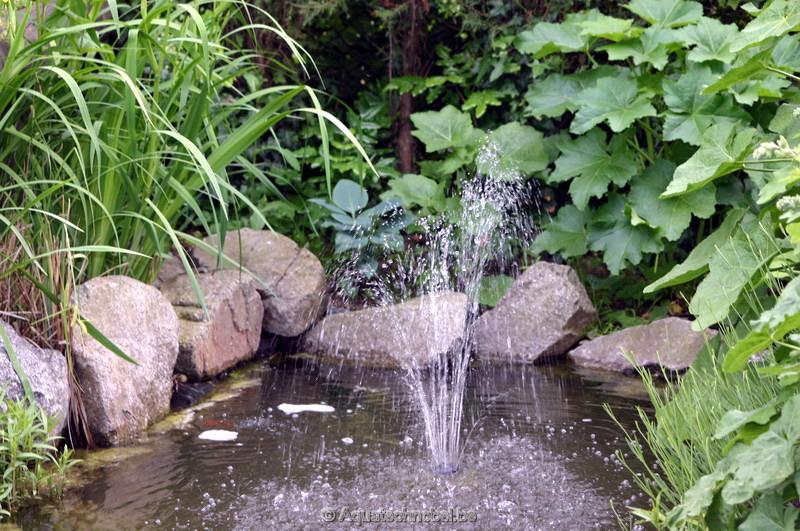
Too often forgotten, the pond itself is a filter!
After watering, over time, a biofilm is created in the submerged area, where algae will be born.
What can I do to get this biofilm?
Nothing, this biofilm will come on its own. It is very important to preserve it as well as small algae because both contribute much more than is believed in the filtration of the pond. Moreover, this bio film will serve as a nursery for a whole fauna.
As I always say: " Un alga-free ponds is a pond sick« .
Anoxic filter
This type of filter is not suitable for the pond. It is too difficult to implement on the one hand, and too dangerous to use, on the other hand!
The principle is simple, at first glance: a moving bed tank does the trick. Just cut the bubbler that moves the filtration media and you get an anoxic filter. Under the filtration media will appear a biofilm that will consume dissolved oxygen from the water. Then, ananaerobic proliferation will consume nitrates.
Great! You will tell me, but it happens that anaerobics are pathogens. If you make any mistakes in handling when cleaning the tank, you will have a health disaster in your pond!
The risk benefit is very unfavourable for this type of filtration.

Mechanical and biological handsets
The principle is the same as for the sand filter, if it is that the sand is replaced by plastic beads.
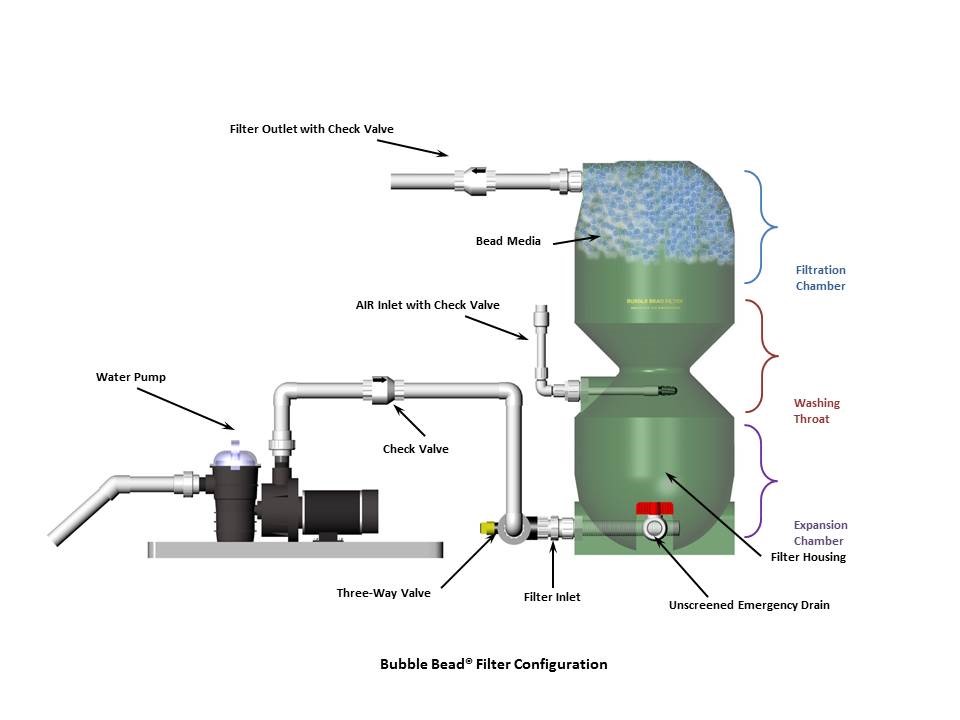
This filter contains thousands of 3x5mm plastic balls. Due to their buoyancy, the logs will be housed in the top of the filter. This mass of beads is the bacterial medium as well as the biological part of the system.
Fine particles also remain attached to these balls, so there is also a mechanical action.
An air injection is made at the centre of the filter to increase bacterial activity.
The ideal solution is to place a mechanical filtration upstream of this filter. For example: a grilled prefilter, a drum filter or a multi-cyclone. The last one is most often used.
These filters can also be supplemented by an optional integrated UVC. It can be purchased with manual or automatic cleaning.
The cleaning phase consists of operating a series of valves and valves. Watch carefully the drawings illustrating the condition of the different intake or outlet valves.
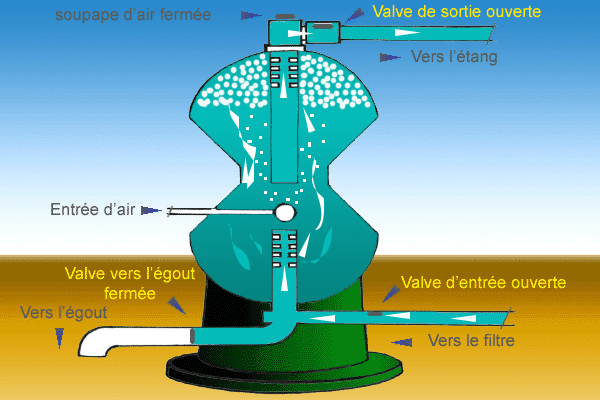
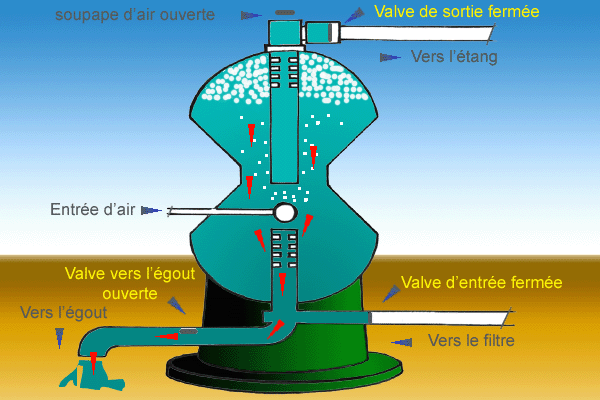
Above, you can discover the filter in final cleaning phase. As you will have understood, this type of filter is very easy to maintain, especially high-end models, since they are completely automatic.
With this filter, you will enjoy an undeniable comfort of use!
Beads Filter
This filter works under pressure; this involves a powerful and very energy-efficient pump!
The sand is replaced by beads that serve as a bacterial medium.
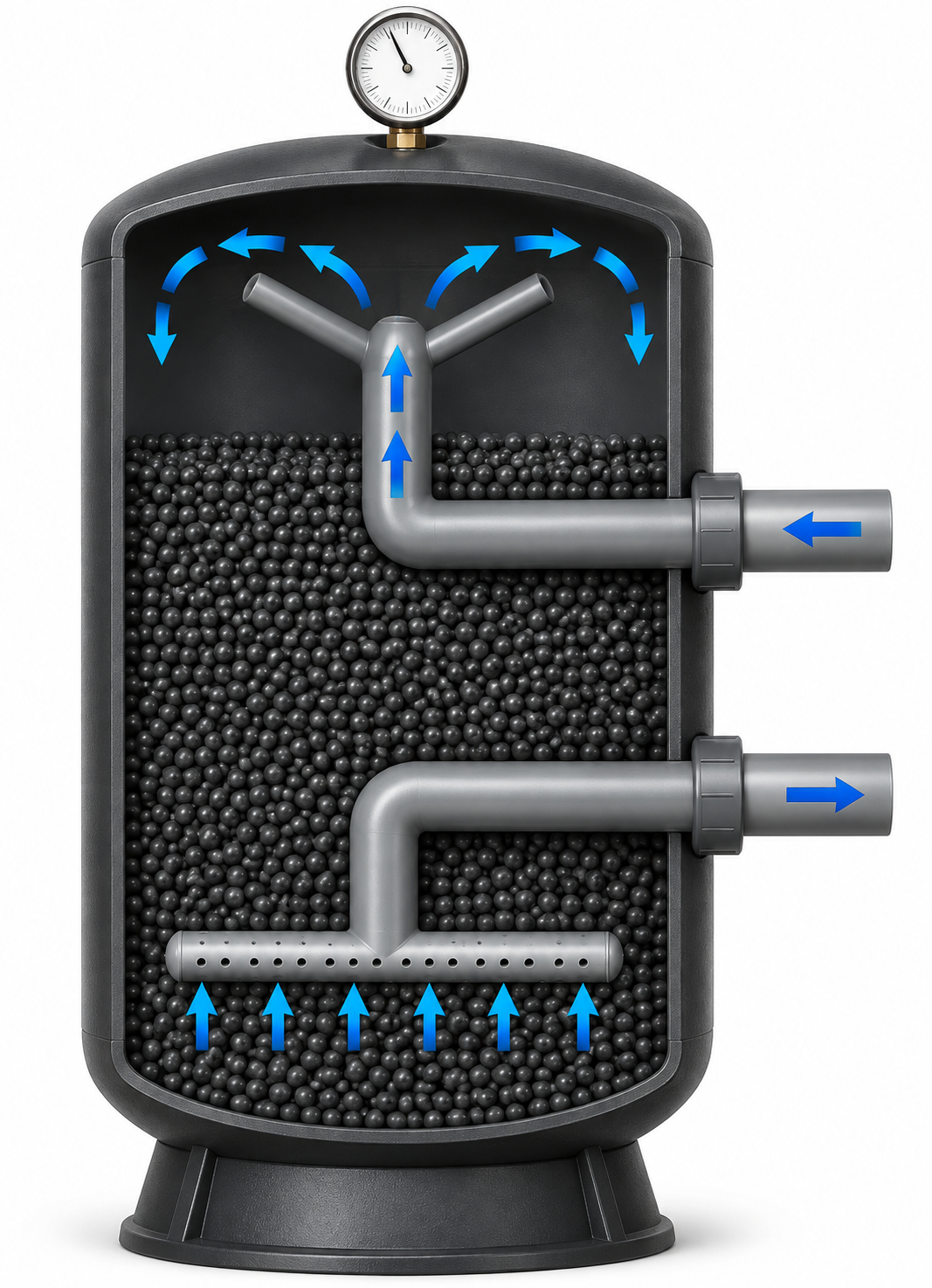
It is necessary to place a mechanical prefiltration before this filter.
A manometer completes the installation, which indicates the moment of cleaning by handling a valve.
This type of filter is a good complement to conventional filtration because it eliminates ESM in the pond. It allows mechanical filtration up to 5μ.
This type of filter alone is not recommended for a koi pond.
Animation of the granular filter
Open the granular filter in full page