
Starting the IBC tank-filter
DIY DIY · Four-chamber filter · Part 3
The first watering revealed problems of resistance and watertightness. Here are the modifications made before the filter operation.
The first test and reinforcements
The first test lasted only five minutes: when the first chamber was filled three quarters, the separation wall broke under water pressure.
It was necessary to rethink the assembly to avoid a single wall supporting this effort. Three interlayers were placed perpendicularly and vertically between the two passage walls from one chamber to another.
Another problem arose when the filter was filled: the tank wall was in the form of metal reinforcements and was separating from the separation, leaving a space of about 5 mm. So cups were added over the whole height, at the right of each plate, to limit this deformation and leaks.
Screwing the separations to the tank would have been another possibility envisaged, but the author doubted whether the fixings in the material of the plates would have been held.
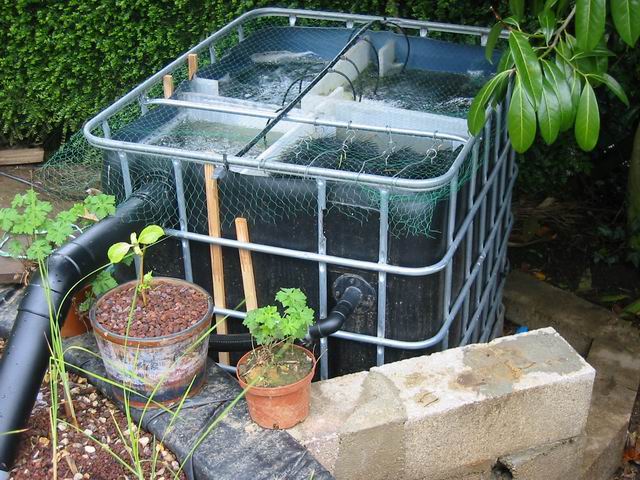
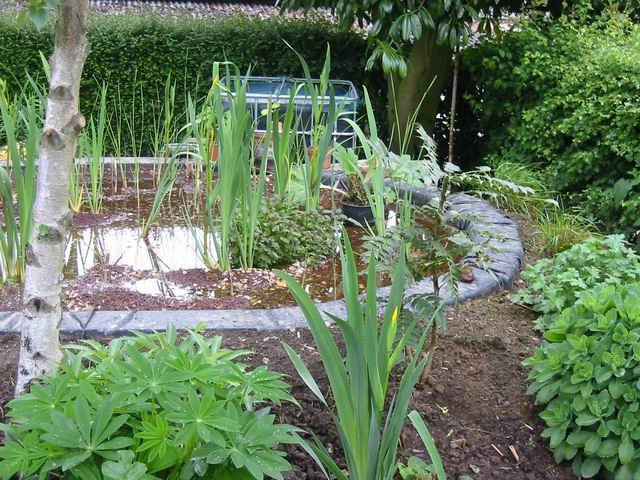
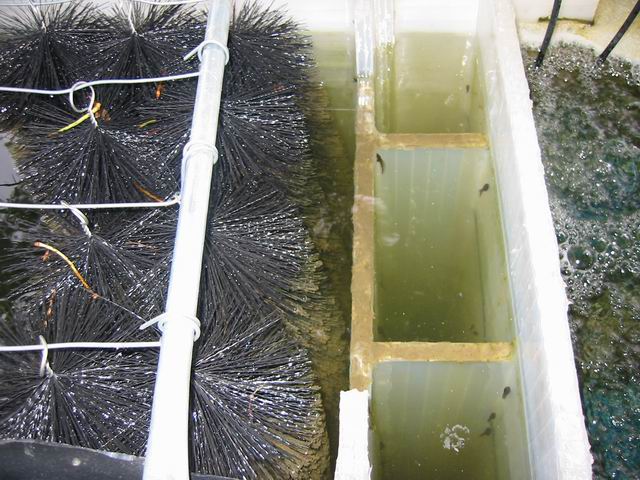
The air distribution network
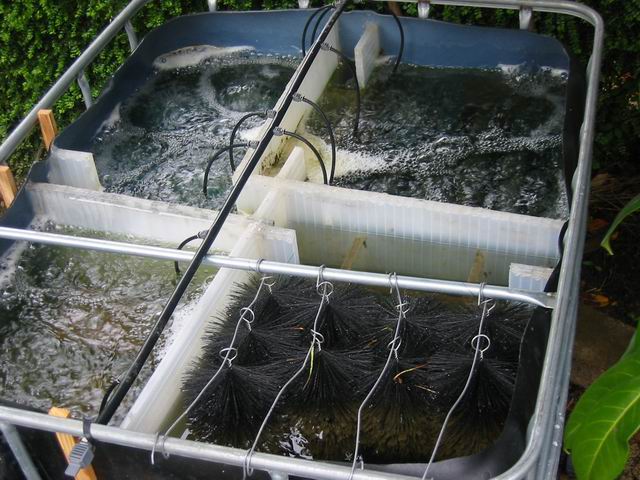
These views show Gardena's Micro-Drip system used to distribute air to diffusers. The author points out that he had chosen components that were easy to obtain.
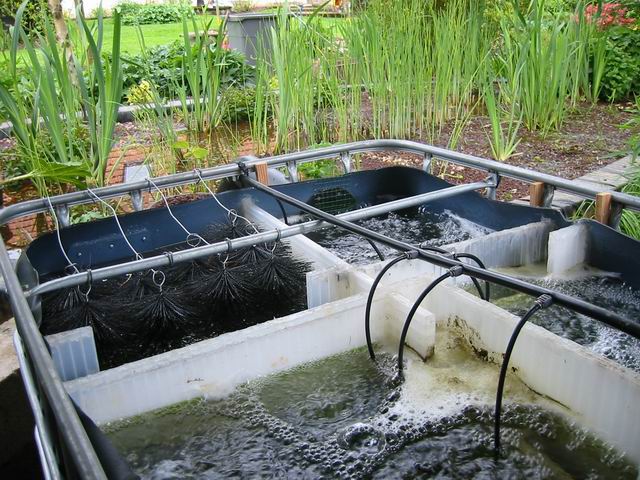
Operating ventilation
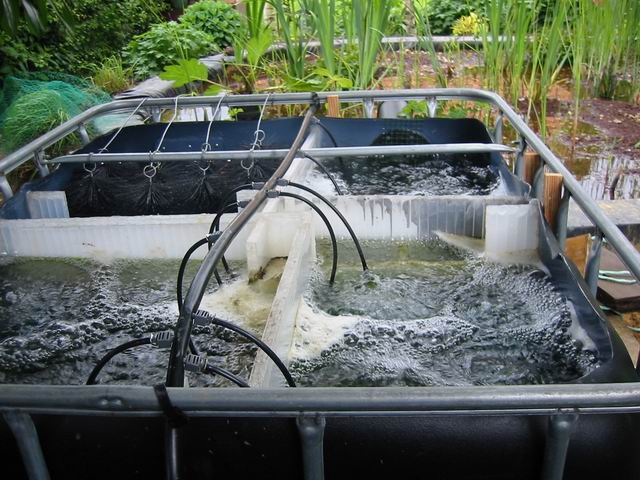
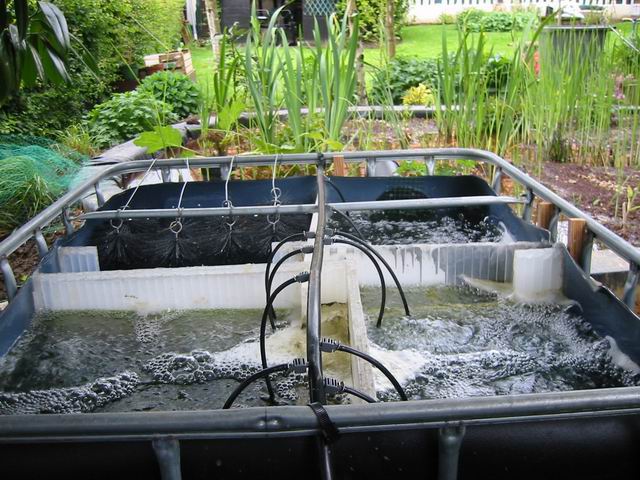
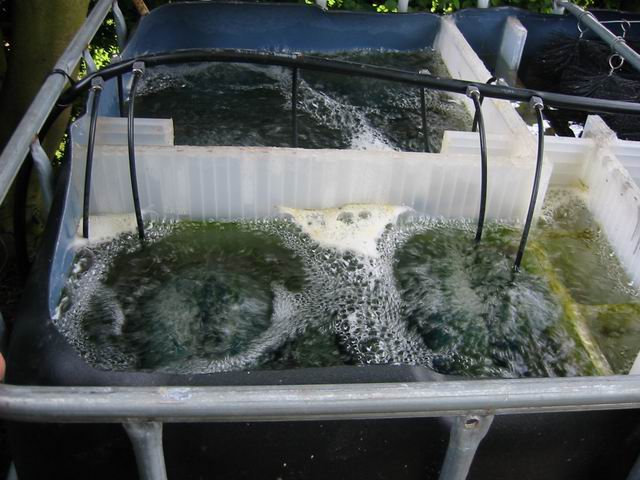
The bubbling visible on the photos illustrates the operation of the BOYU compressor and diffusers in the chambers.
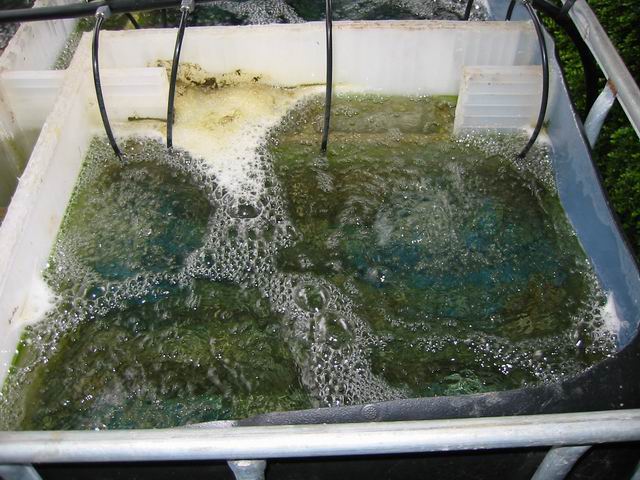
The output and the observed result
A grilling is placed at the outlet to prevent coarse materials, such as leaves or tadpoles, from entering the lagoon.
However, the previous section indicated the grid photographed as a bad solution. The present feedback does not detail any possible modification of this grid.
After the modifications, Laurent indicates that the filter works very well, that the water is clear and that the koi are doing well.
The results of the implementation
This home filter initially has a 1 m³ tank. The testimony highlights its great volume and economic interest, as well as the satisfaction of making it itself.
The principle can be declined with several tanks in series or in parallel, adapting the connections and distribution of flows.
A production by Laurent Renaux, on a project by Artgraphbegain, for Aquatechnobel.