
The scales -Part 1 - The Koi Wagoi
The scales part 1 The Koi "Wagoi"
What do you mean by the term Wagoi?
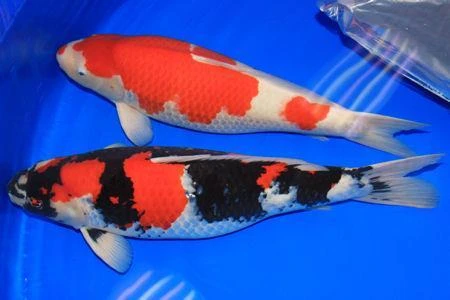
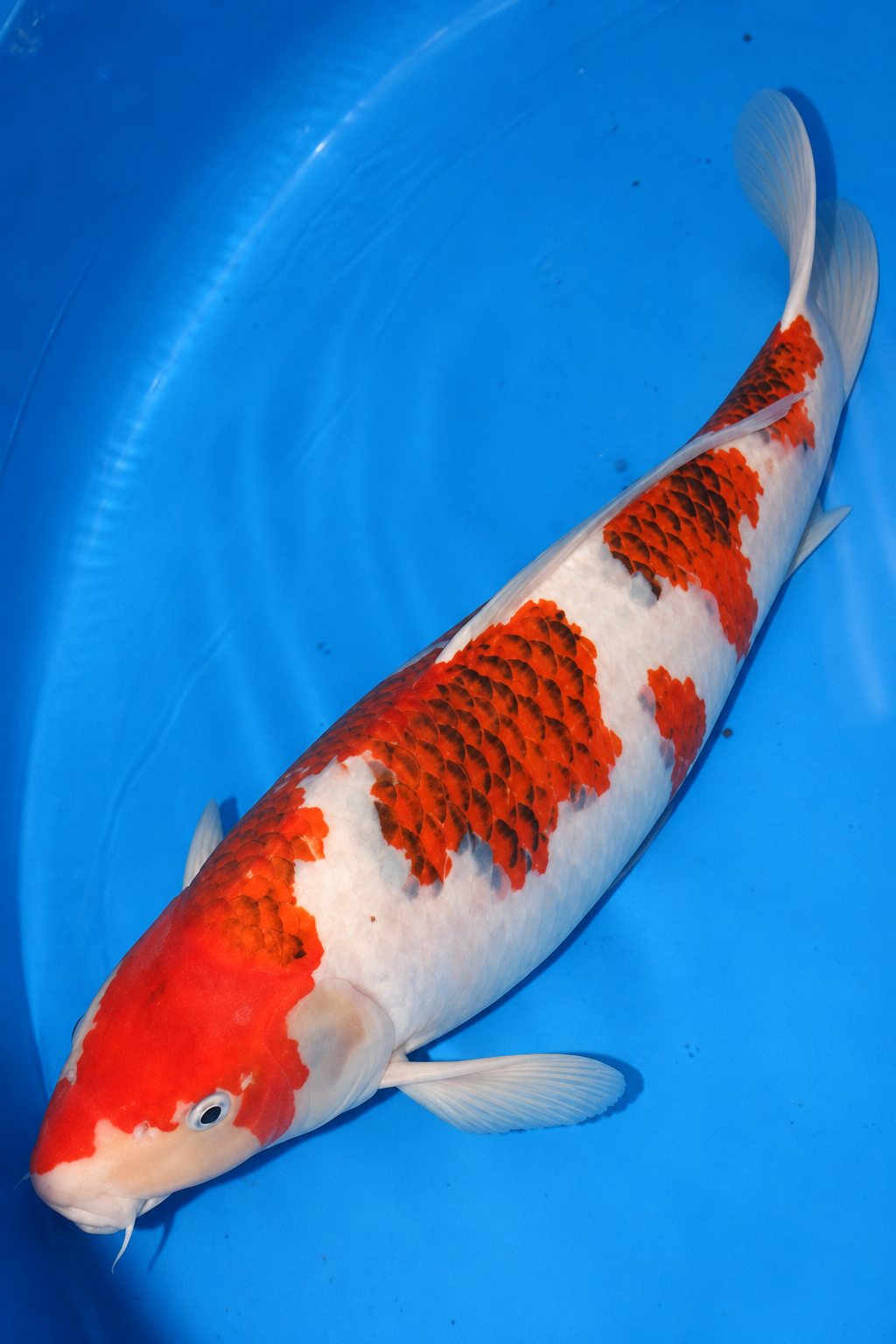
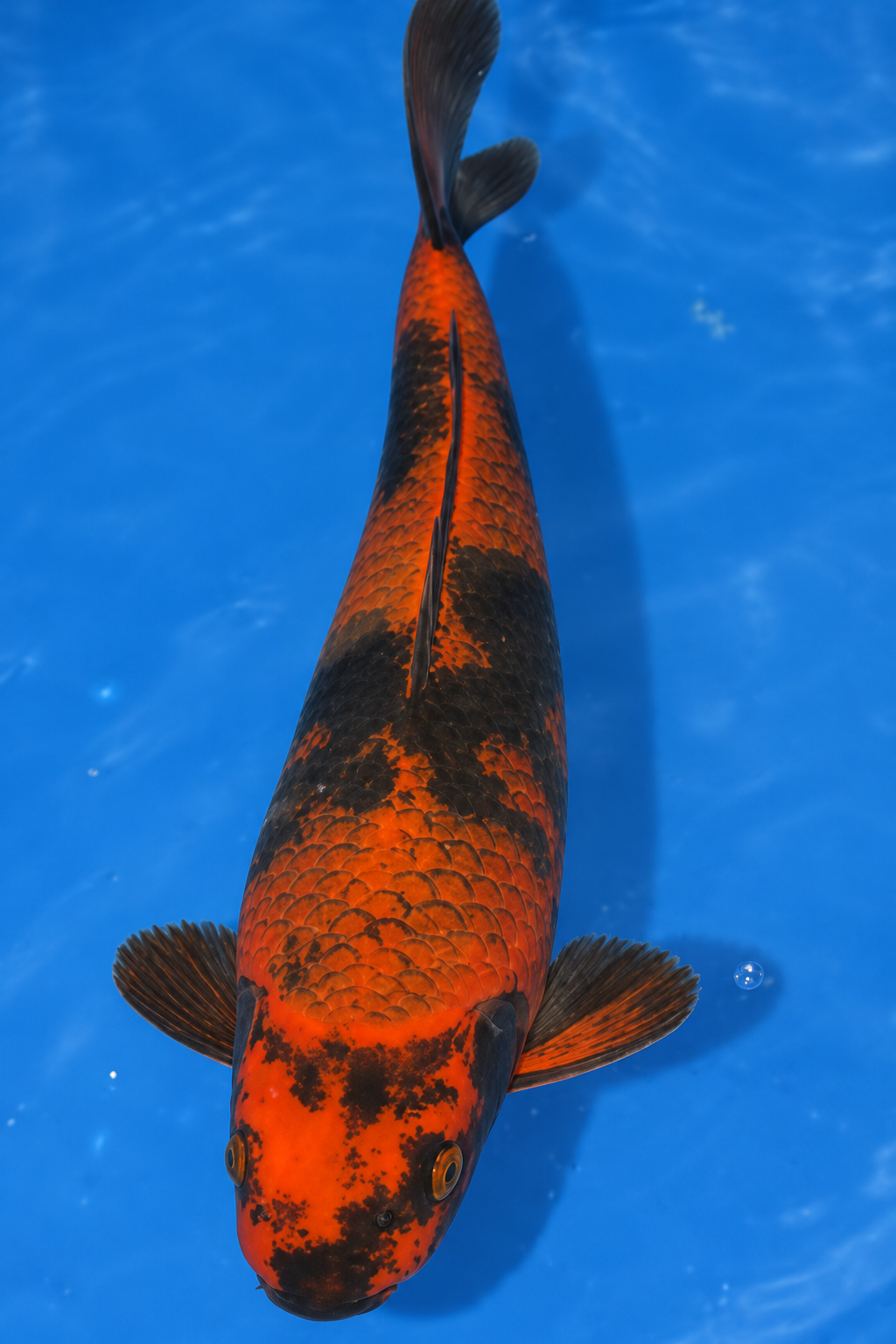
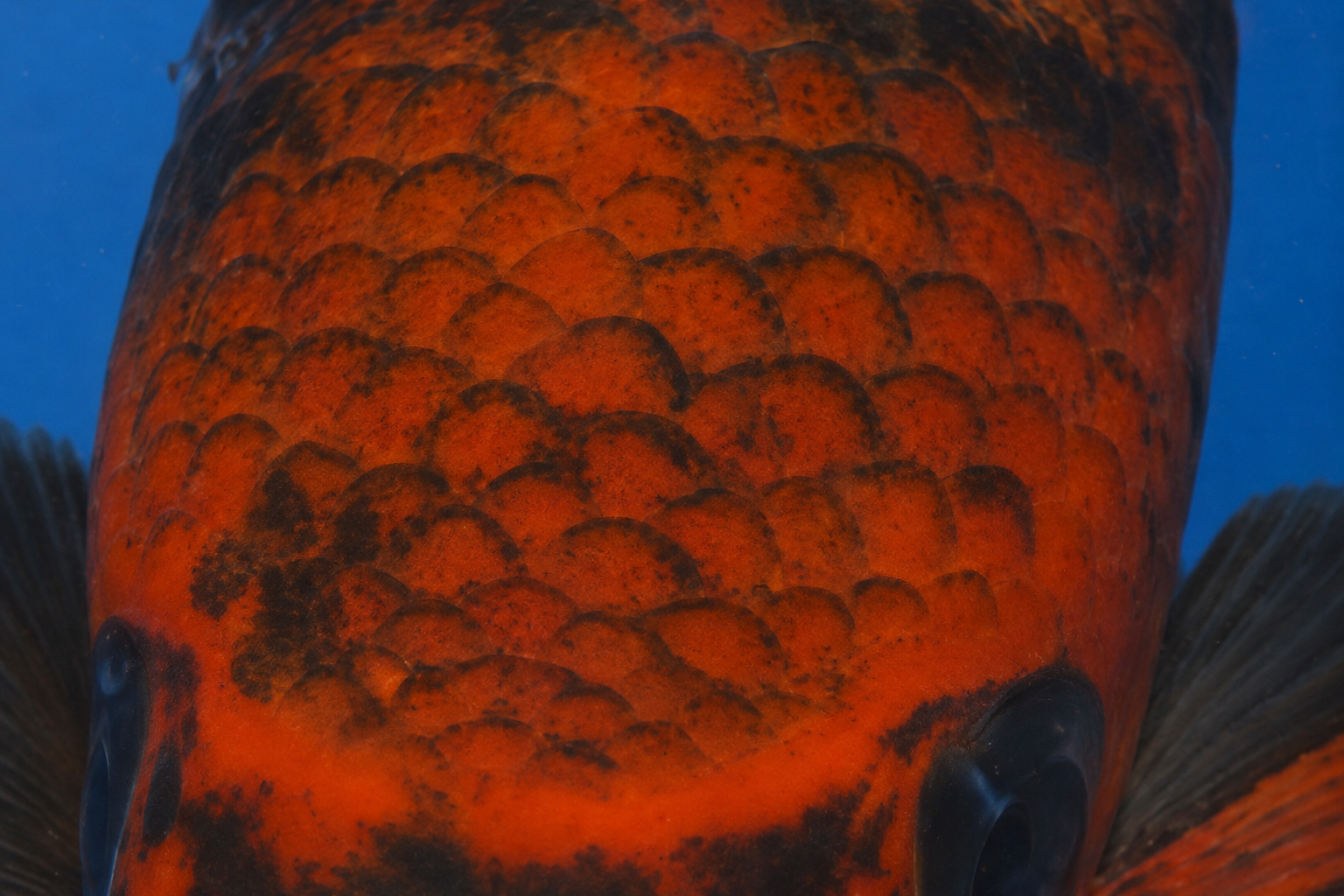
When we talk about a Koi Wagoi, it simply means that he has the body covered with scales in contrast to the Koi Doitsu. Some scales (like the photos below) of Kohaku and Shiro Utsuri are very discreet and do not really bring a "plus" to the fish, we will see that for other varieties, the scales are part of the family's specifications, they bring a great deal more to the fish either in the form of a drawing on scales for families of the type Goromo, Goshiki, Kujaku or Matsuba, or in the shape of the brilliance for the Koi called "Kinginrin". You can see the placement of the scales on the two photos below. They are positioned like roof tiles, which gives this small armor a great flexibility. This is a photograph of a Kohaku and a Showa with the scales clearly visible.
The discrete scales of a Kohaku, the discreet scales of a Shiro Utsuri.


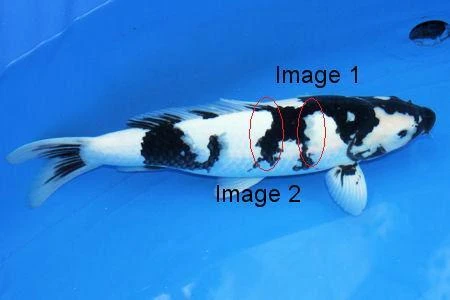
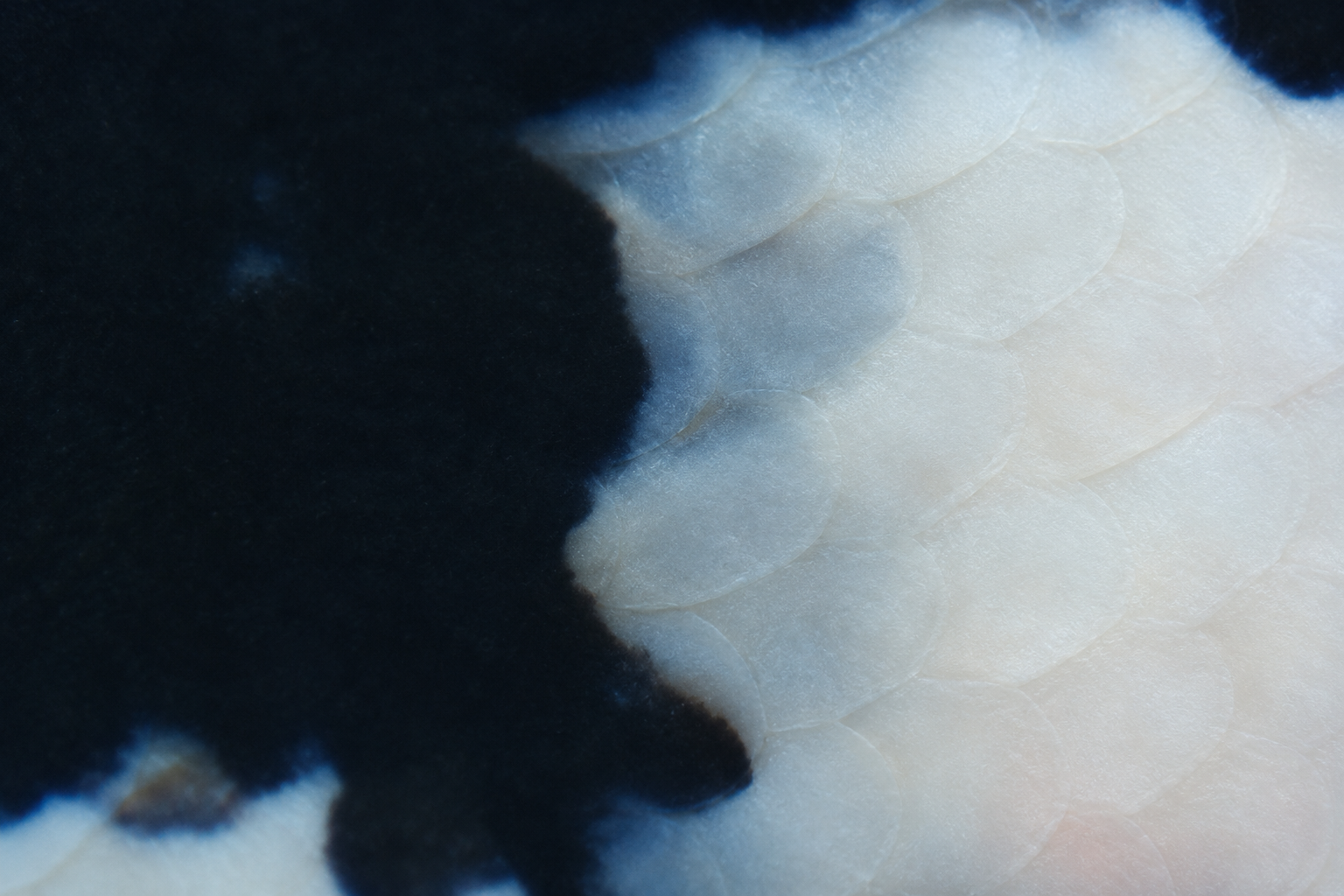
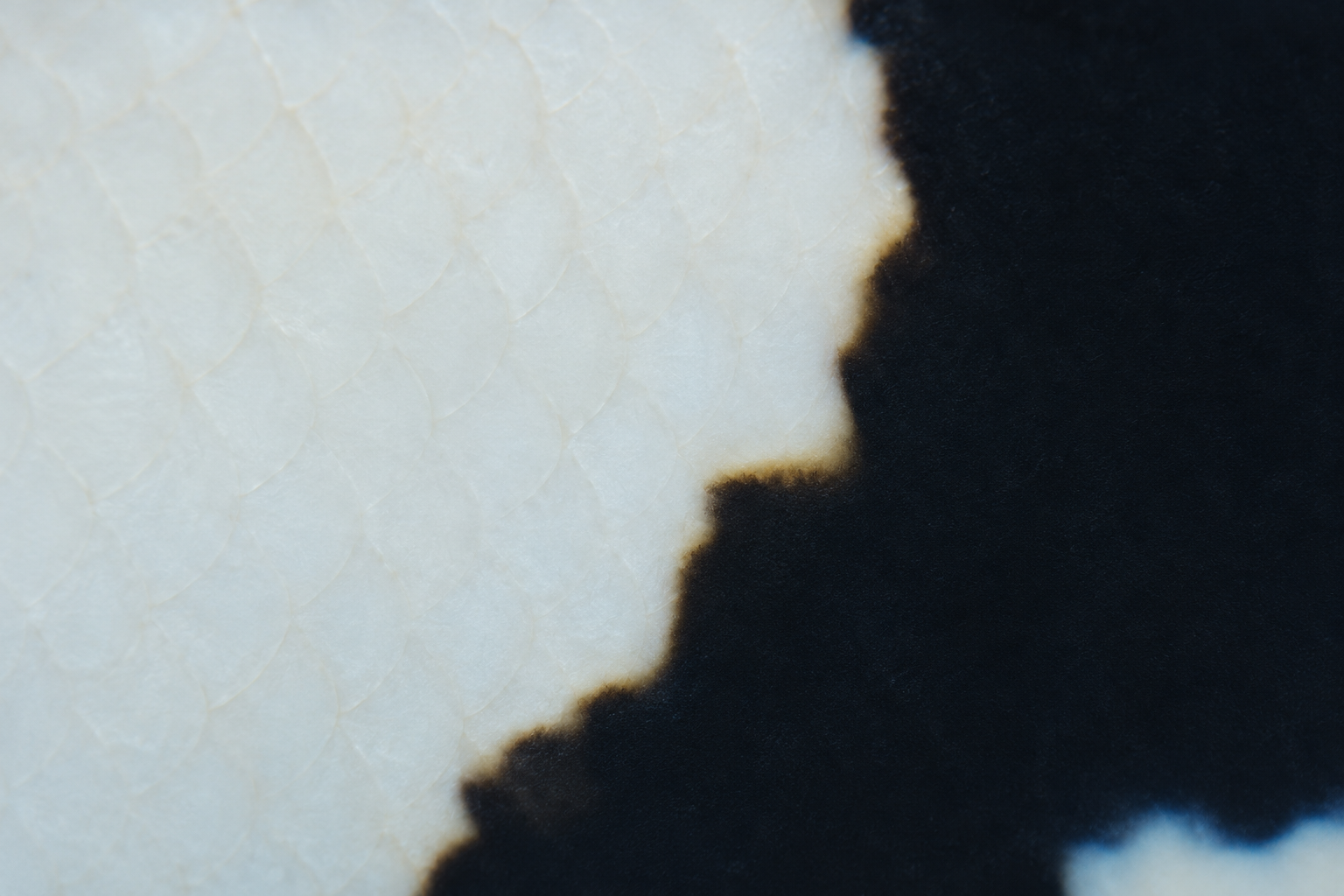
The Sashi and the Kiwa. Even if they are discreet and colorful for some family, the scales intervene in the precision of the color marks on the body of the fish. Recall that the scales are placed like tiles from a roof, starting from the head to the tail. The first scale is partially superimposed on the next one. This is important, as an example the Shiro Utsuri which is a black and white Koi because it makes the phenomenon more visible. At the front of a brand, we have a white scale that overlaps with a black scale, which gives a greyish edge called Sashi because we can see by transparency the coloured scale placed under the white. While at the back of the brand we have a black scale that is superimposed over a white and it gives a much sharper edge called Kiwa. This particularity is clearly visible on the Kohaku.
Let's look at the fish below in more detail:
It's a Shiro Utsuri from Omosako. (A Shiro reference).
Expansion of the "Image 1" zone. The greyish line of the Sashi is clearly visible at the front of the black mark. Larger "Image 2" area. The separation at the back of the black spot called Kiwa is much clearer.
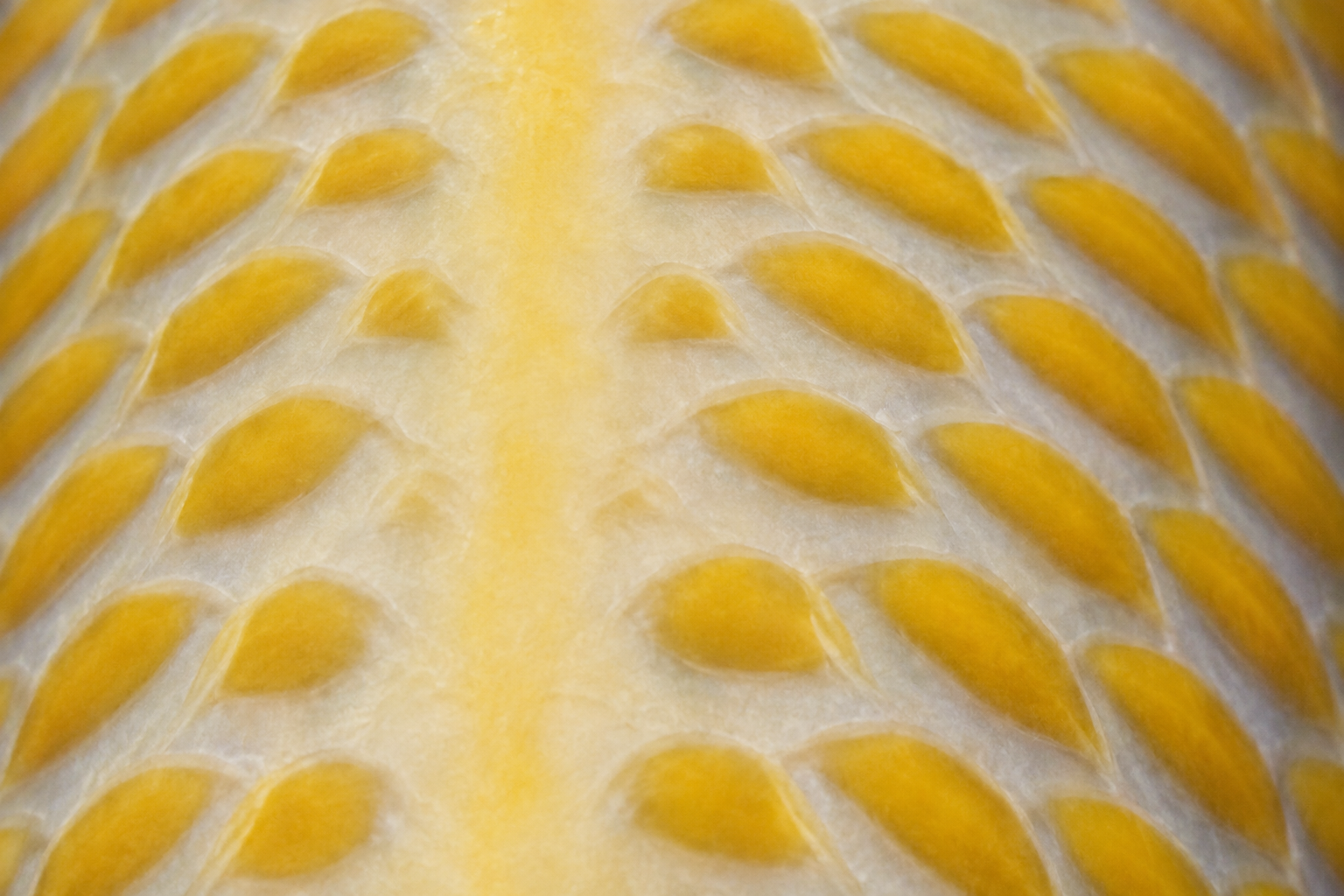
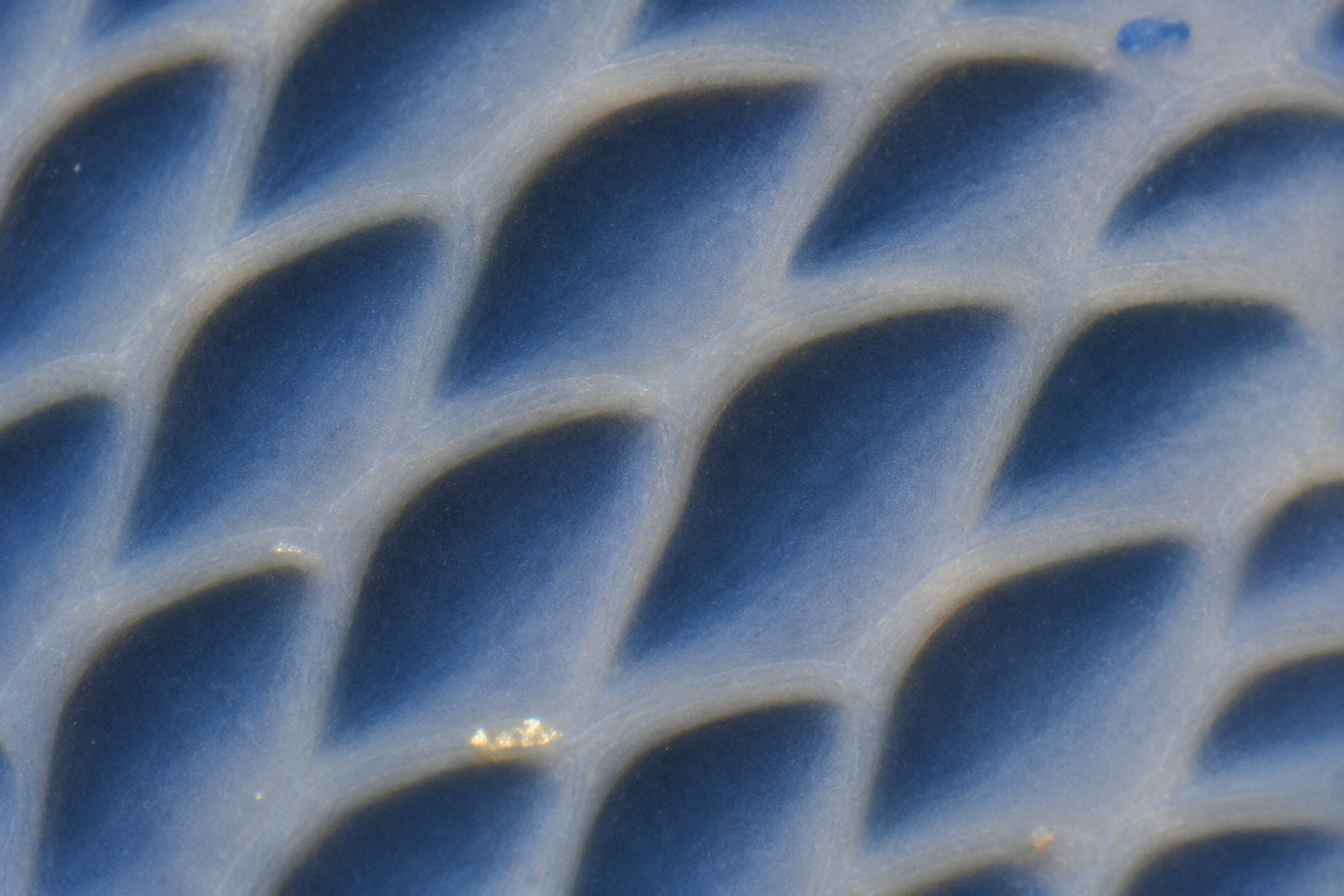
The Fukurin. Scales can under certain conditions create what is called the Fukurin, which gives a slightly reticulated look to the fish. Fukurin is not a drawing strictly speaking, during the growth of the fish, scales that overlap like tiles of a roof no longer do. Between each scale, the skin of the fish begins to appear and reflects the colour of the skin, giving the impression that a small "net" is placed on the back of the fish. This characteristic is visible only on Koi aged from three to four years because it must reach a size of +/- 70cm. The Fukurin and the Sashi cannot coexist, for the Sashi, it takes scales that overlap, for the Fukurin one needs scales well separated.
Here's a picture of a fish with a superb Fukurin:
In this photo, you can easily see the yellow scales, surrounded by the whiter skin of this Ogon. On this photo of the back of an Asagi, this cross-linked aspect is even more marked.

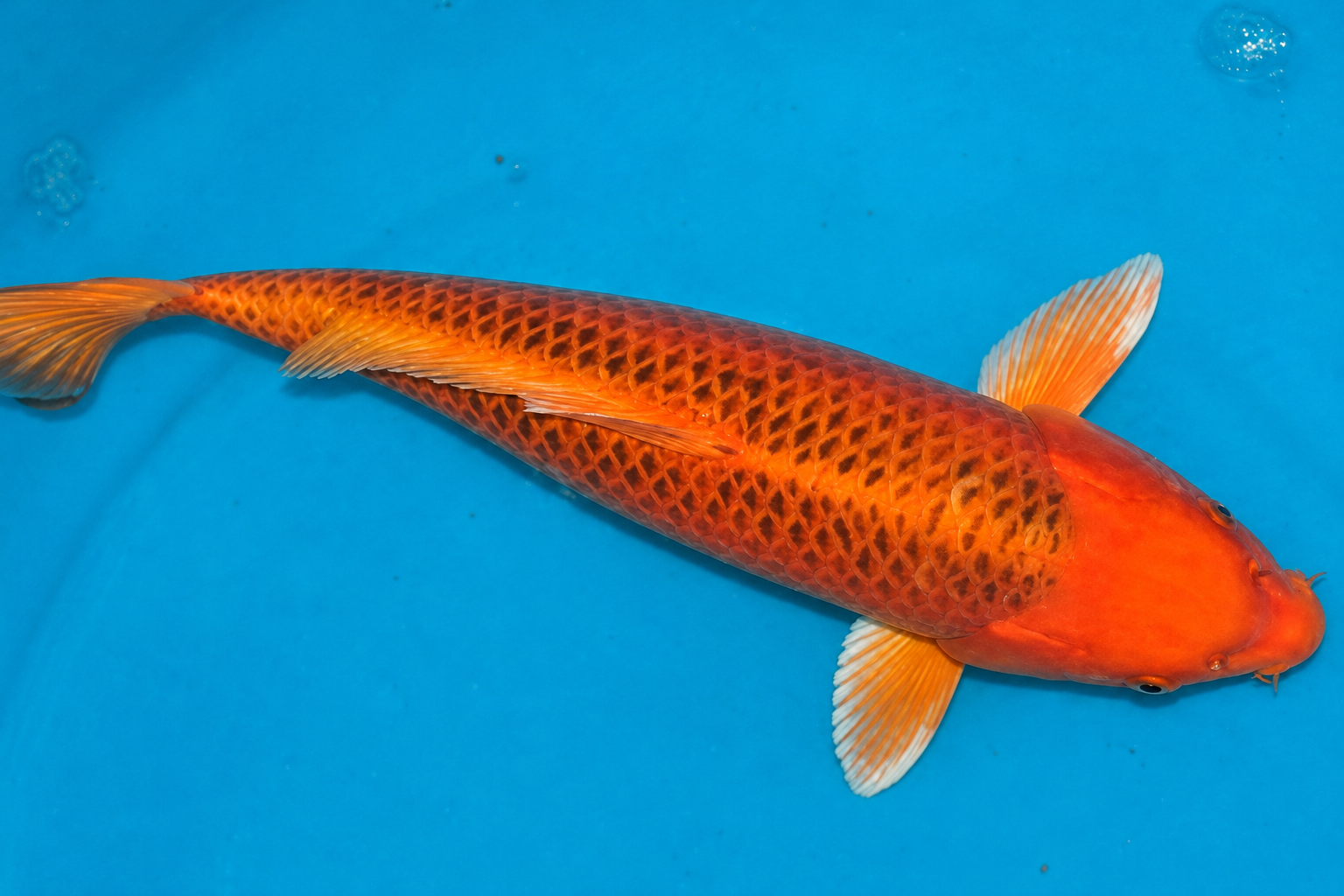
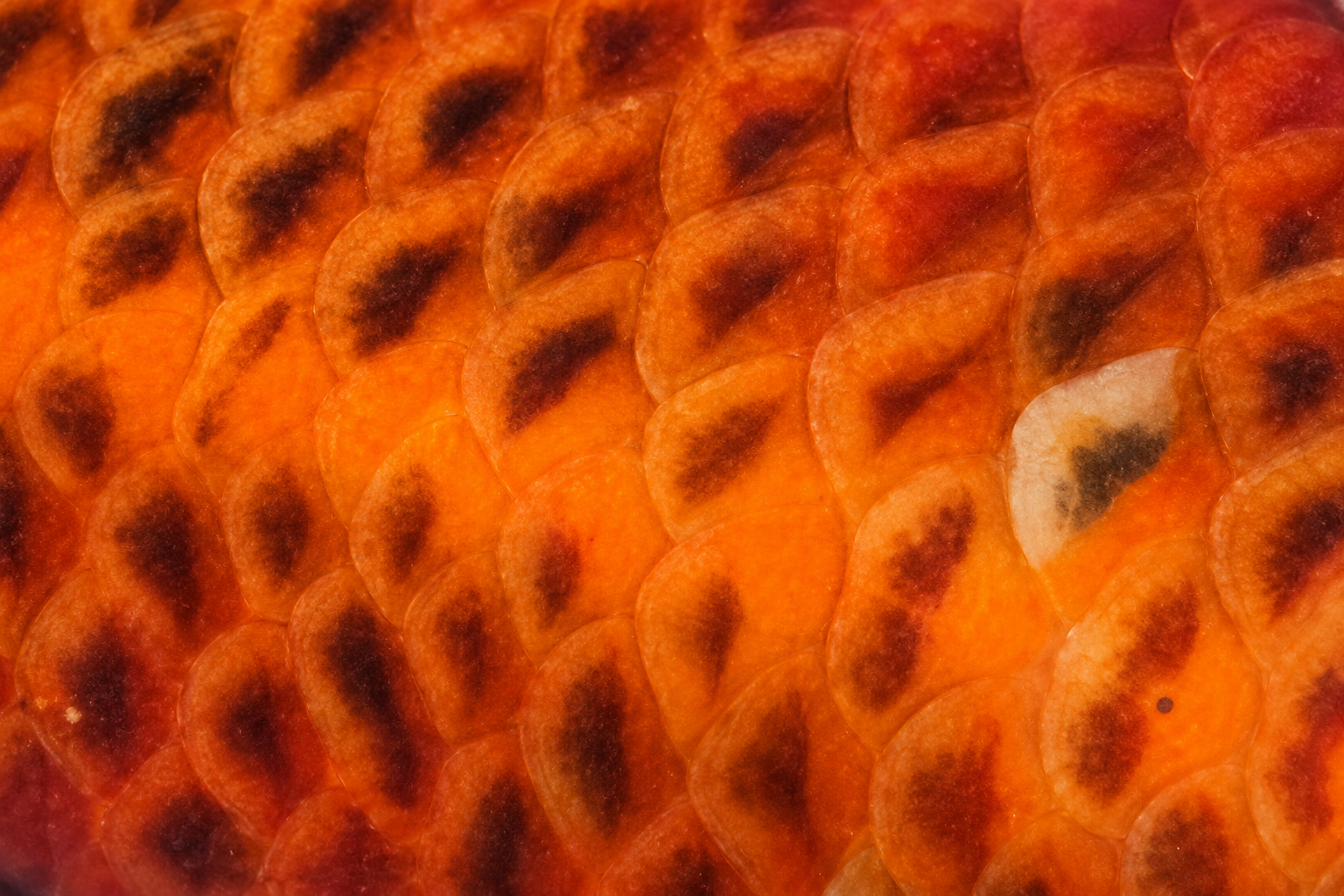
The Matsuba drawing. The scales can also have a particular drawing, this is what we will look at now starting with the Matsuba design. The scales with a Matsuba pattern have a darker center than the outside, which gives an aspect in "pine apple" well characteristic of the family Matsuba and Kujaku because they have blood from the Gin Matsuba.
Here's a picture of a beautiful Aka Matsuba:
In detail, the drawing on the scales of the Aka Matsuba. Or you can see the darker center of the scales. In this photo you can see a Kujaku scale. Family based on the Gin Matsuba .
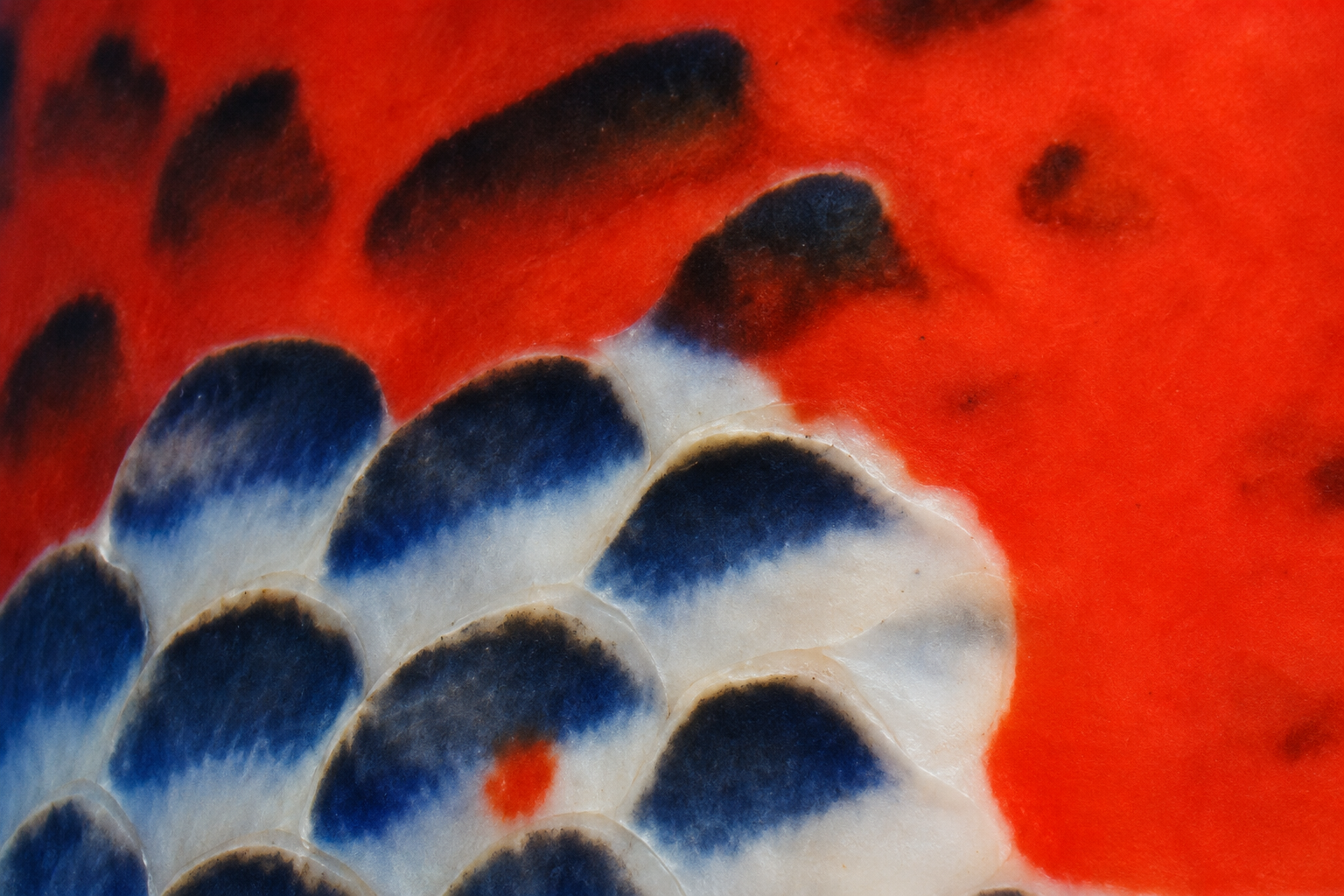
The drawing Goromo. After the drawing Matsuba, let us now look at the drawing Goromo, this drawing is present on several families, of course the Goromo but also the Goshiki. The drawing is no longer characterized by a dark center at the level of scales but by a color edge Ai (Indigo) or Sumi (black).
Here's a picture of an Ai Goromo:
In detail, the drawing on the scales of the Ai Goromo. Or you can see the darker edge (Indigo) on the Hi scales. Here, the scales of a Goshiki. Where one can see the deeper edge (Indico) on the scales Shiroji.
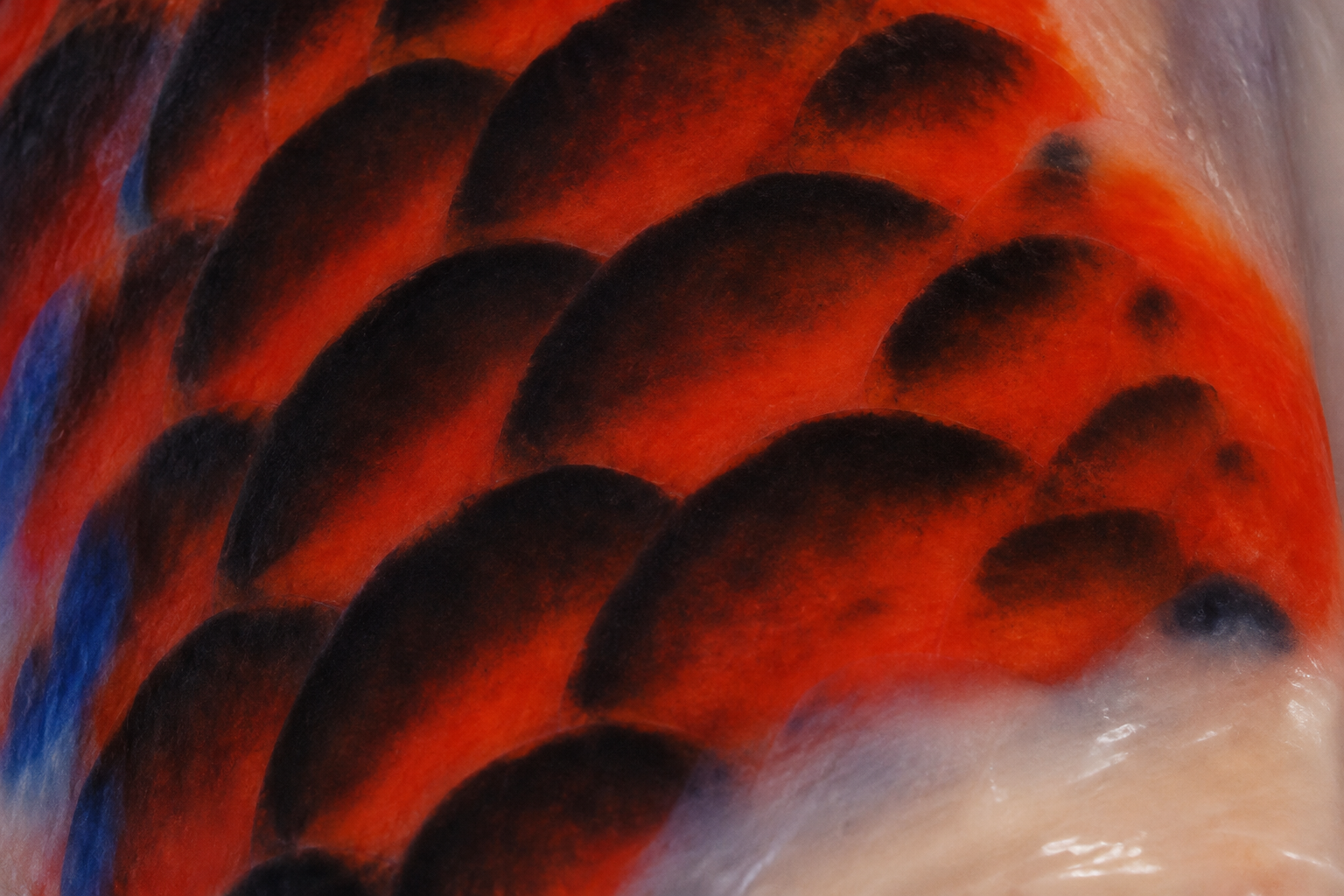
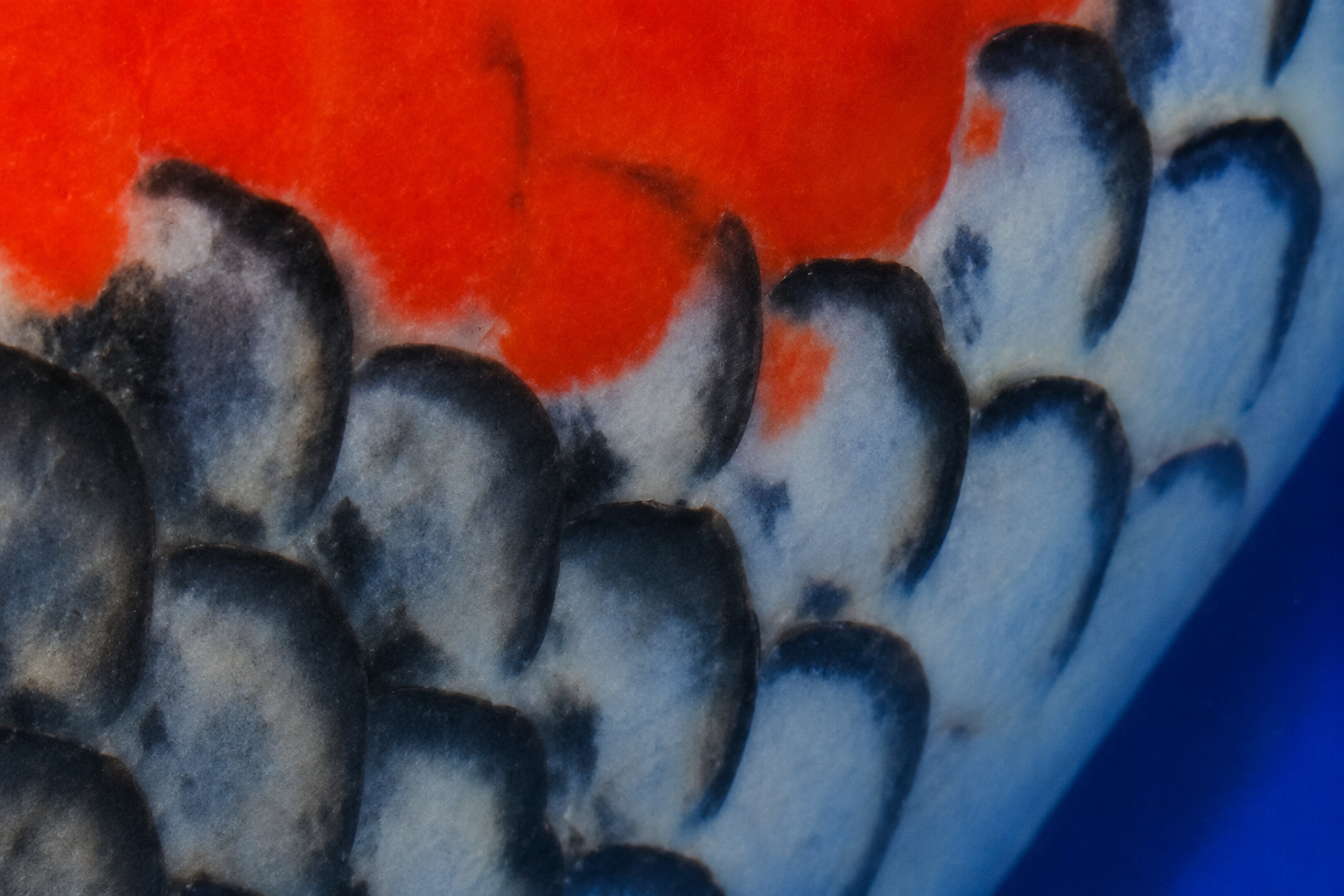
The Kage and Kanoko drawing. The Kage drawing shows scales in an intermediate state, not really Sumi, not really the color of the fish. Kage means "Ombré".
The Kanoko drawing is represented by Hi marks in the Shiroji of the size of a scale. Kanoko means "Faon" in Japanese because the pattern resembles the camouflage of a young fawn. Here is a Kage Hi Utsuri. One can see the effect "Ombre" on the scales of the fish. The Kanoko design is represented by hi marks the size of the scale.
Detail of the drawing Kage. Detail of the effect Kanoko.


Glossary:
Wagoi:
Carp covered with scales.
Sashi:
Represents the line of junction between the front of a task and the white where a color scale is partially covered by a white scale. This gives a much more blurred line of appearance. Ideally, the junction makes a scale, it must be regular and can disappear with the age of the fish. A "Sashi" on two scales is called "Nimai Sashi" and on three scales, a "Sammai Sashi". Sashi exists only on the "Wagoi", not on the Doitsu.
Kiwa:
Coloured scale that covers a white at the back of a mark. This gives a clear separation line.
Fukurin:
It is the small part of skin that appears between the scales of a large Koi, it gives a slightly reticulated appearance as if a slight net was placed on the fish. Fukurin is more visible in the family Hikarimono. At first it was thought that it was only possible with metallic Koi, but at present this is no longer the case. This term is mainly used for Ogon, Kohaku, Sanke and Showa, for others, rather the term "Net Pattern" is used.
Matsuba:
The scales have a dark center indigo (Ai). Unlike the Kage that appears on the Shiroji, the Matsuba also appears on the Hi. This pattern is found on the metal and non-metallic Koi.
Kage:
"Shade" drawing that appears where Sumi is not expected, it is often in the form of a dark center on a clear scale. A Kage pattern does not appear on a young fish, it must wait until it reaches 3 years before possibly the pattern appears.
Kanoko:
Meaning "Faon", these are small Hi spots in Shiroji often the size of a scale.