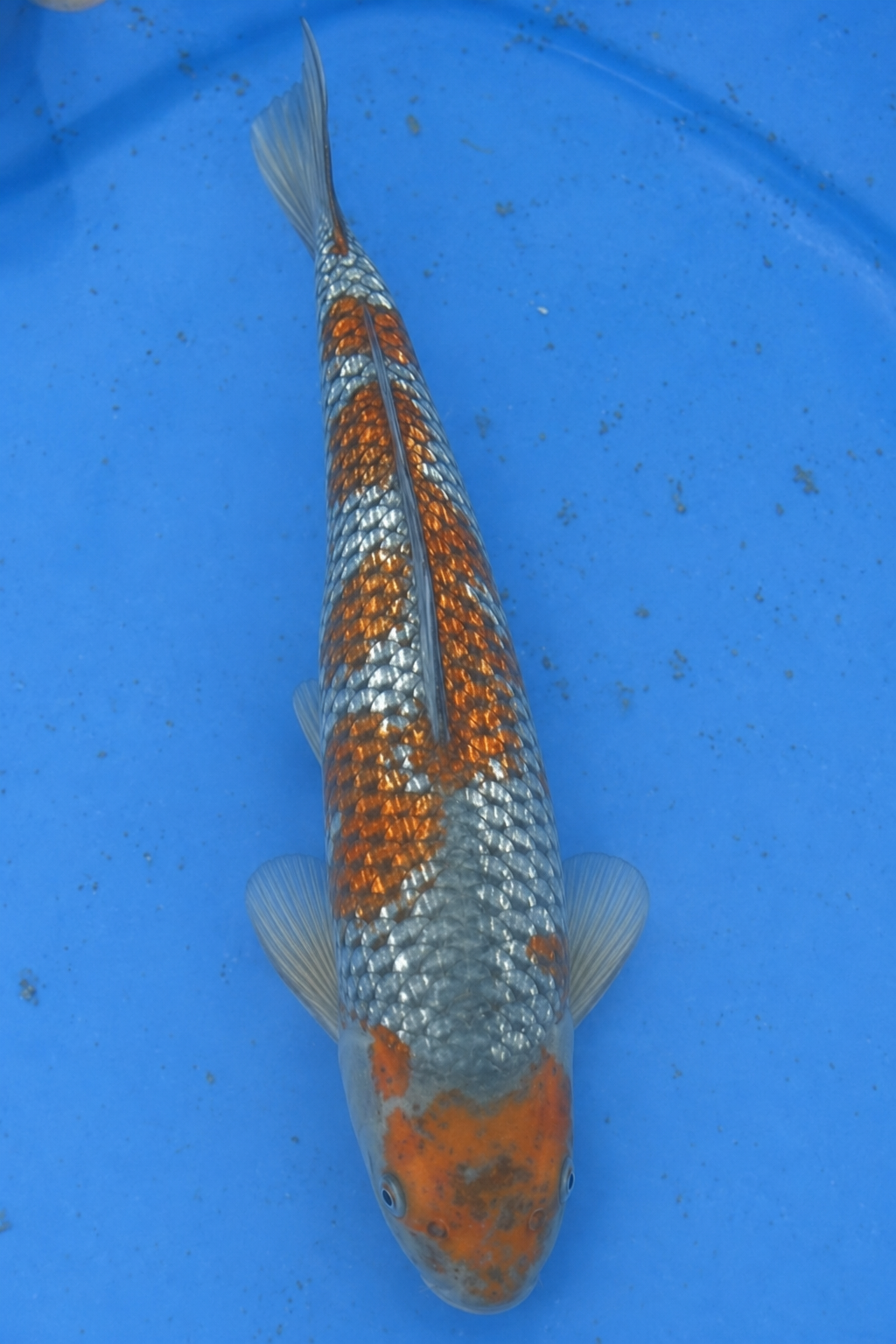
The scales -Part 2 - The Koi Kinginrin
The scales part 2 The Koi "Kinginrin" or more simply "Ginrin"
What do you mean by Kinginrin?
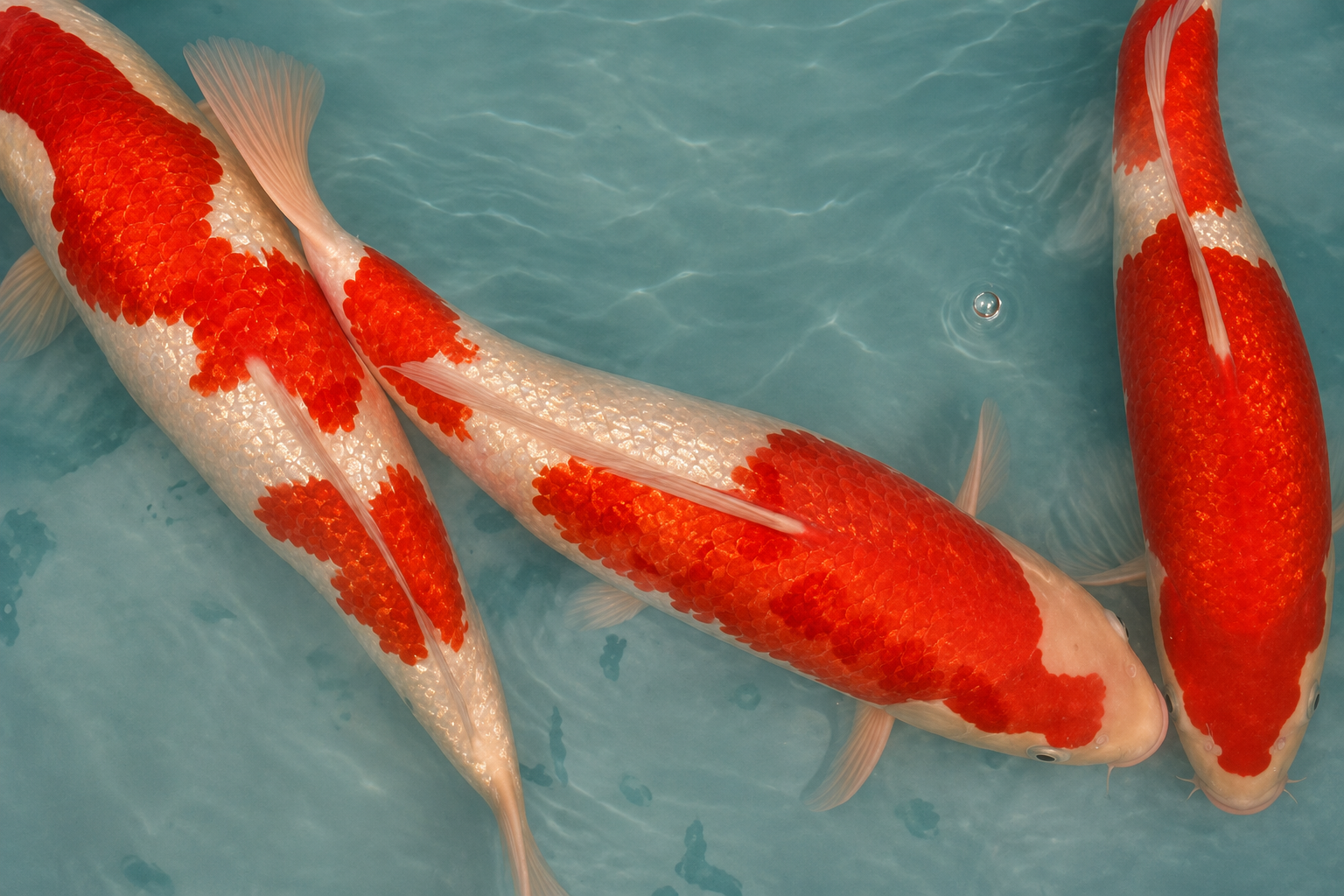
Kinginrin is a strange name for a person who does not care about the Koi, Kinginrin, it is the result of the assembly of three Japanese words which are Kin, Gin and Rin. Kin means "gold shine", Gin "silver shine" and finally Rin means "scaille". In short, Kinginrine means "scaling with gold and silver shine". This type of scale has a golden reflection (Kin) on the Hi and Gin on the Shiroji. Kinginrin is often abbreviated in Ginrin and is used to describe a Koi that has brilliant scales. To be qualified as Ginrin, a Koi must have at least 20 scales with this particularity. The Kinginrin effect is the result of accumulation in the scales of a pigment called "Guanine". When buying a Kinginrin, it is not only necessary to base itself on its brilliance, because when the fish is small, the scales are tight and the whole body shines, this phenomenon will decrease with size and so you must not forget to prefer a fish with a very beautiful pattern. Here are three Ginrin Kohaku, one can notice the golden reflection (Kin) on the Hi and the silver reflection (Gin) on Shiroji.
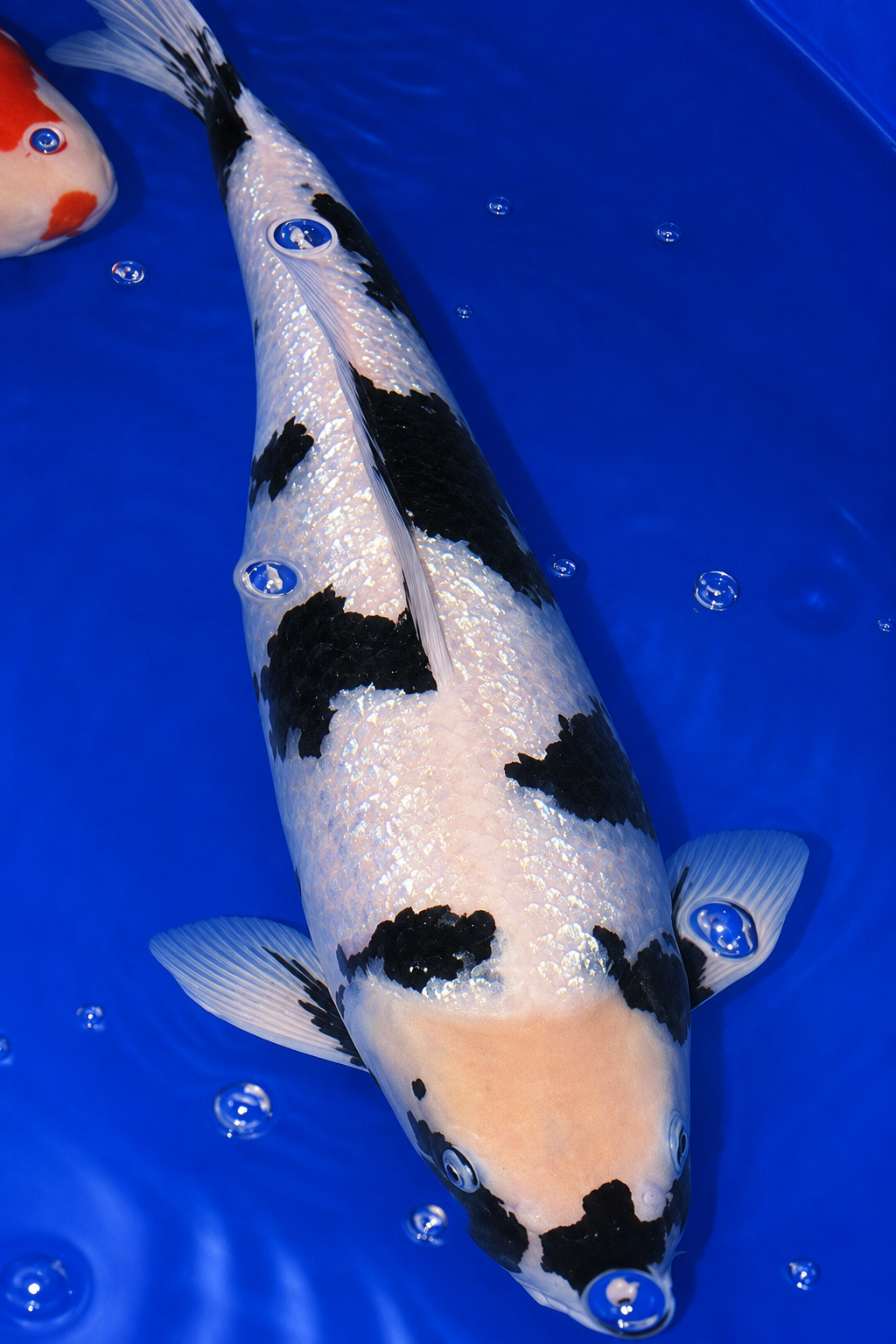
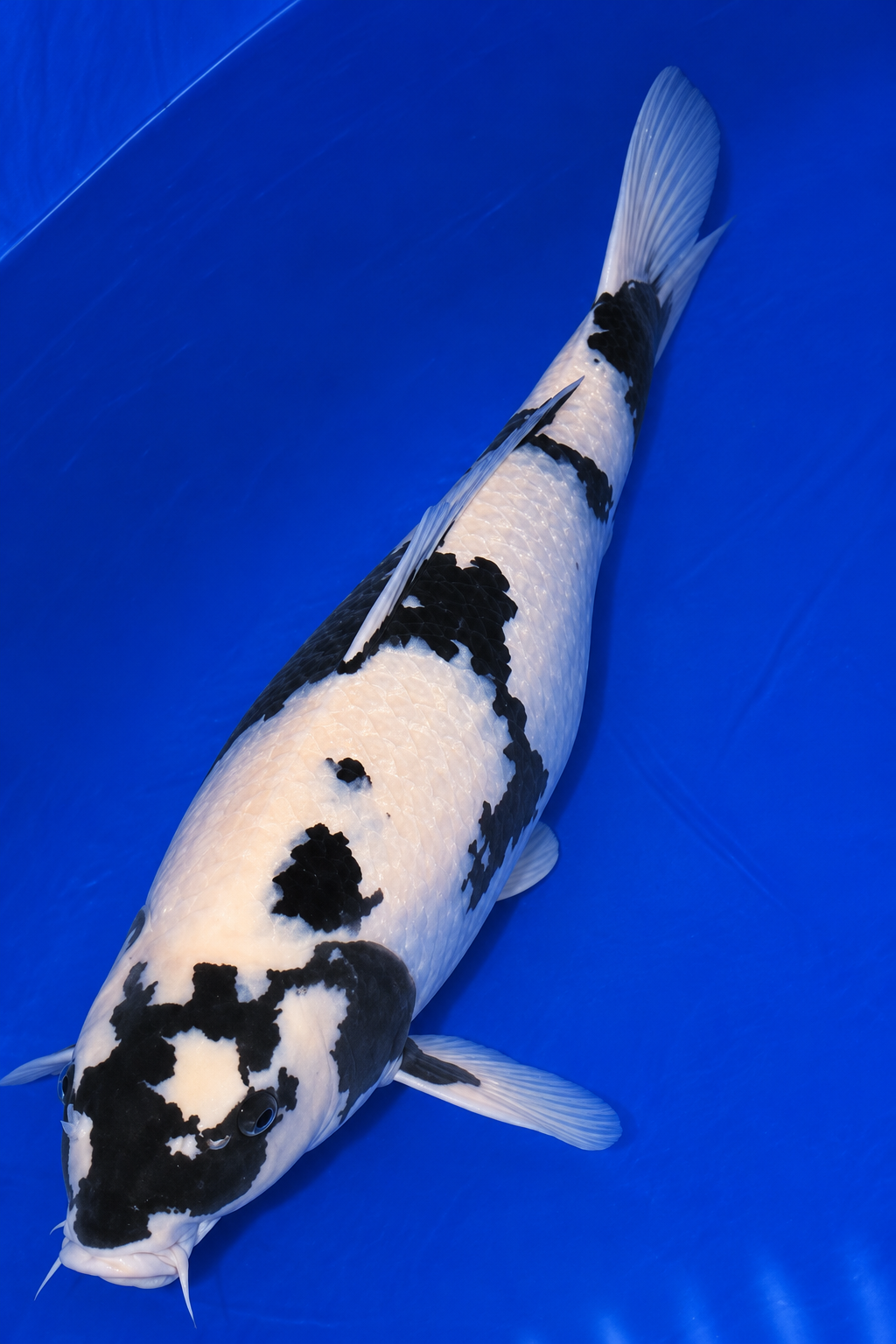
Below, the difference between a Ginrin Shiro Utsuri and a simple Shiro Udsuri. A Kinginrin Shiros Utsuris. A Shiro Usuri.
Below, the detail of the Kin and Gin brightness. The Kin (Doré) reflection on the Hi. The Gin (Argenty) reflection on Shiroji.
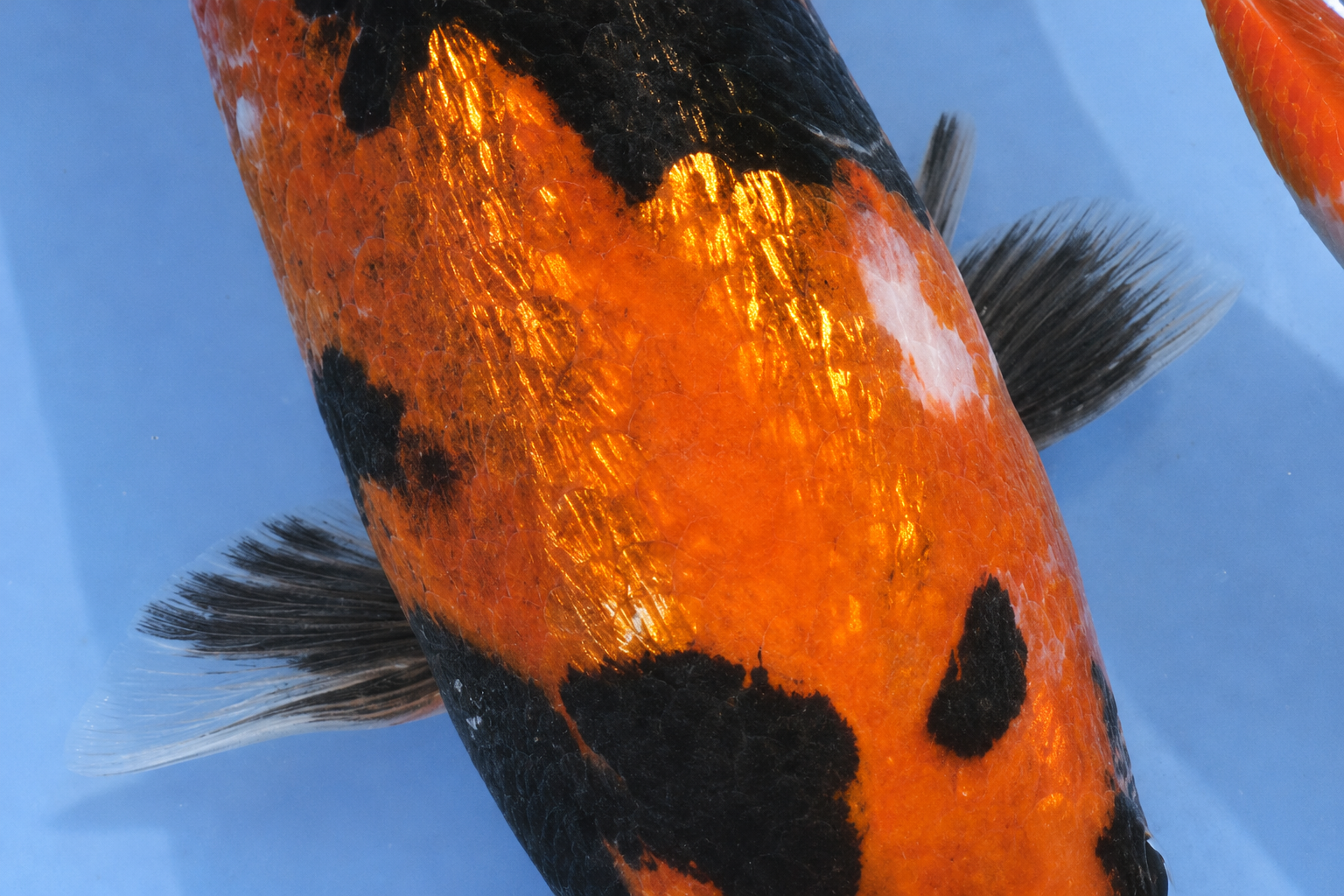
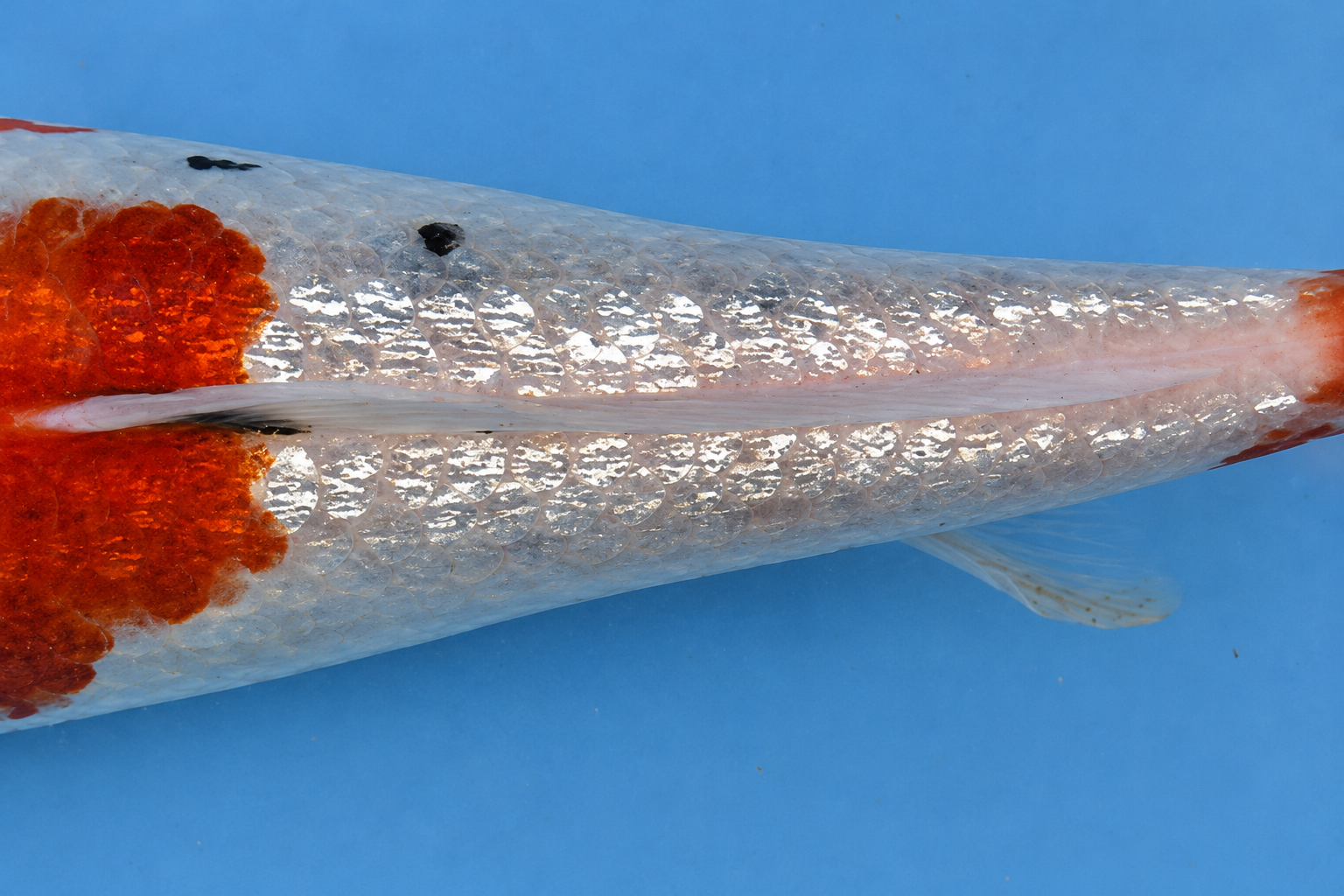
Kinginrin scales.
Everything could have ended here, but there are four types of Kinginrin scales:
Pearl Ginrin, Beta-gin, Diamond Ginrin and Kado Gin.
The Pearl Ginrin. This shape of scale is also known as Tama-jin or Tsubu-gin. The characteristic of this scale is to have only the brilliant center, as if a pearl was located at the center of each scale. This form of scale tends to tarnish with age, one rarely finds large and quality Koi with scales Peal Ginrin . We didn't find a photo, but a little animation gives you a glimpse of it. The pearl Ginrin. The pearl ginrin.
The Beta-gin. Here, the whole scale is brilliant as you can see in the photo and the animation, it is also called Niigata Ginrin. This shape of scale is considered the most beautiful, however, often scales are poorly distributed on the body of the fish, they are more often visible on the sides. Beta-gin, Beta-gin.

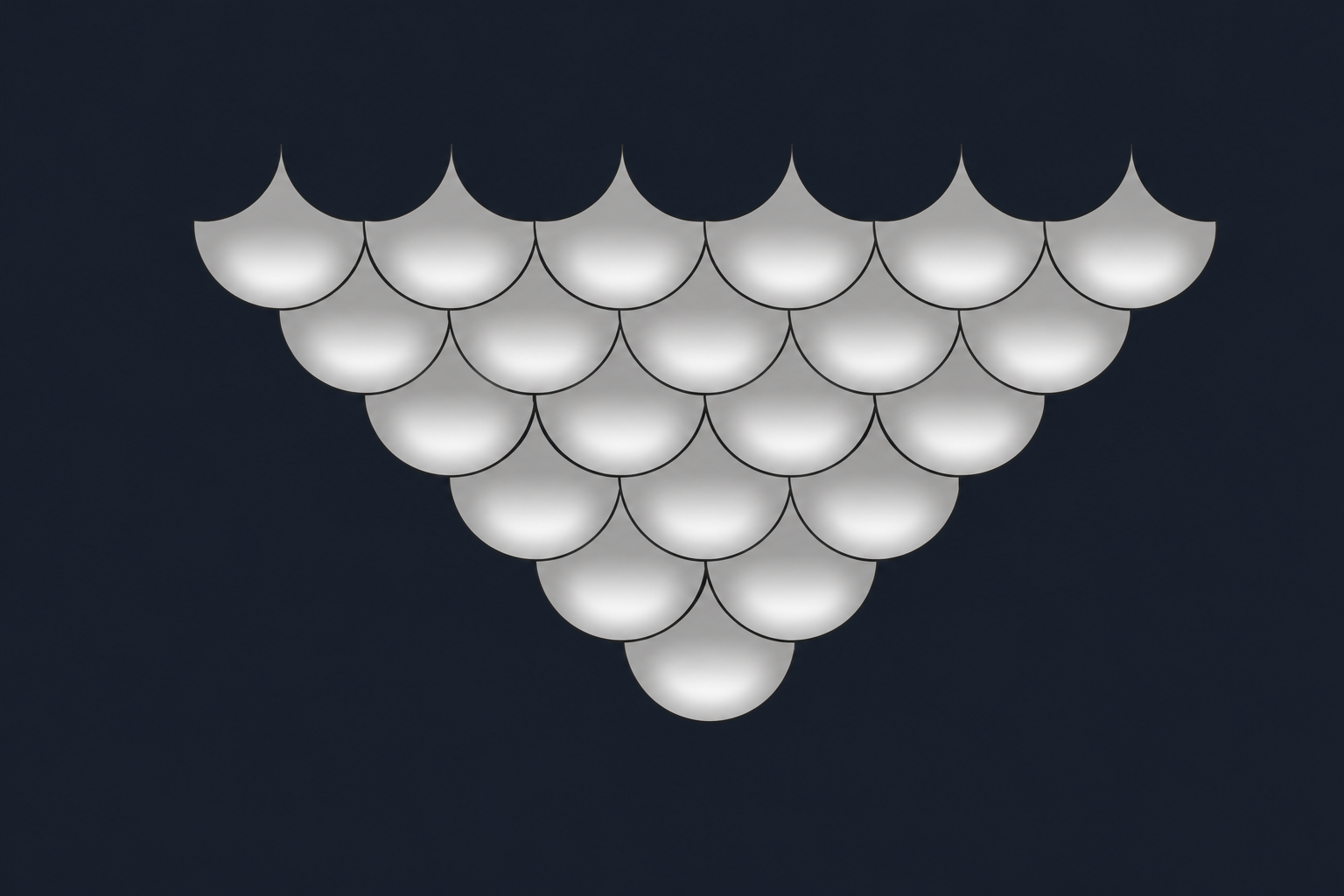

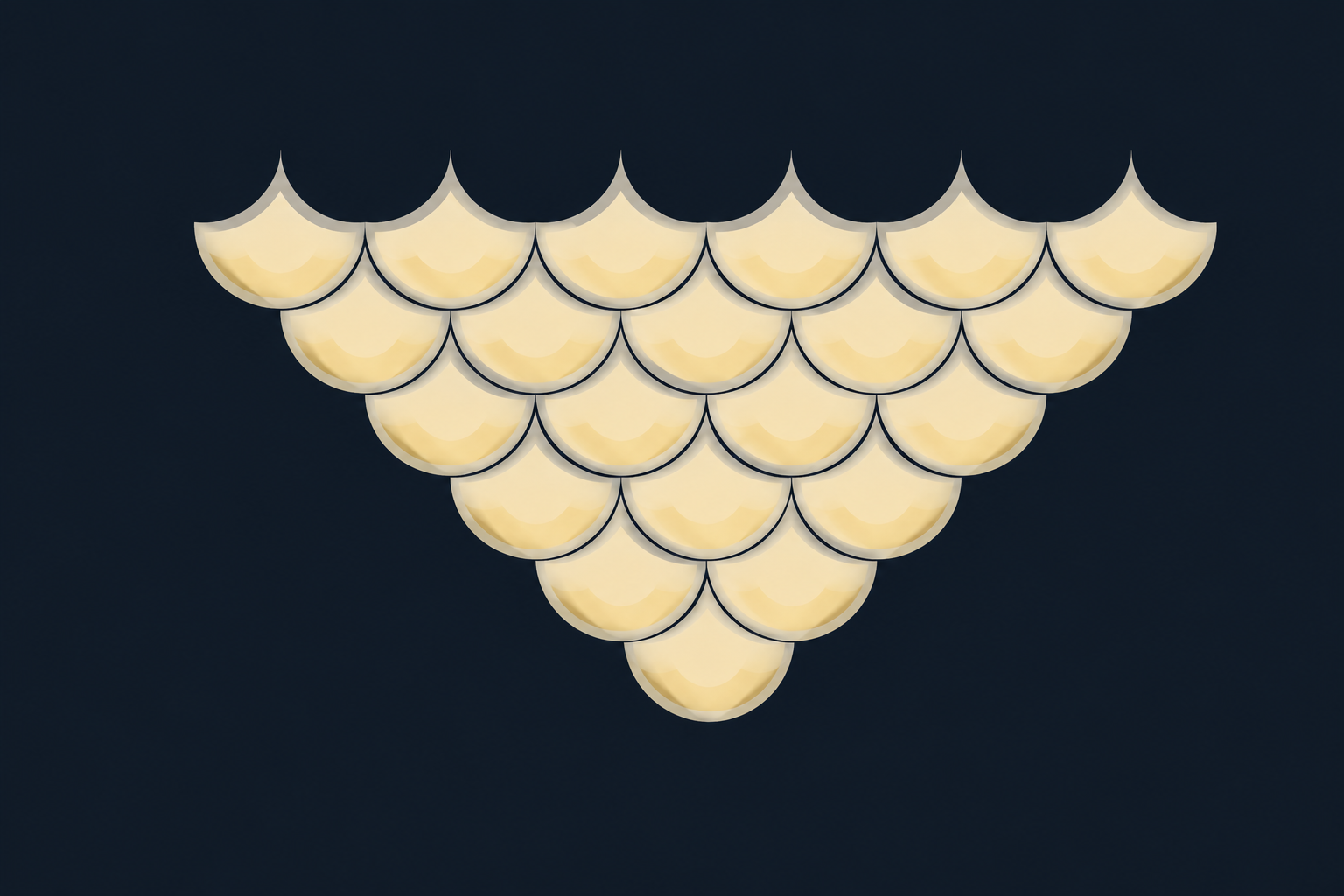
The Diamond Ginrin. This variety is also called Hiroshima Ginrin because it appeared in 1969 in Hiroshimi. The scales shine very hard like diamonds, this variety is appreciated outside Japan, the Japanese find this variety too bright and find there a lack of refinement. The brilliance of the scales is in the form of alternative strips more or less brilliant. It is by far the most common variety in Europe.
Diamond Ginrin.
The Kado-gin. This last variety is characterized by a limited shine at the edge of the scale, Kado means "board" in Japanese. In Japan, the Kado-gin scales are not very popular because the Kinginrin radiance is very irregular. No photo either but a small animation. The Kado-gin.
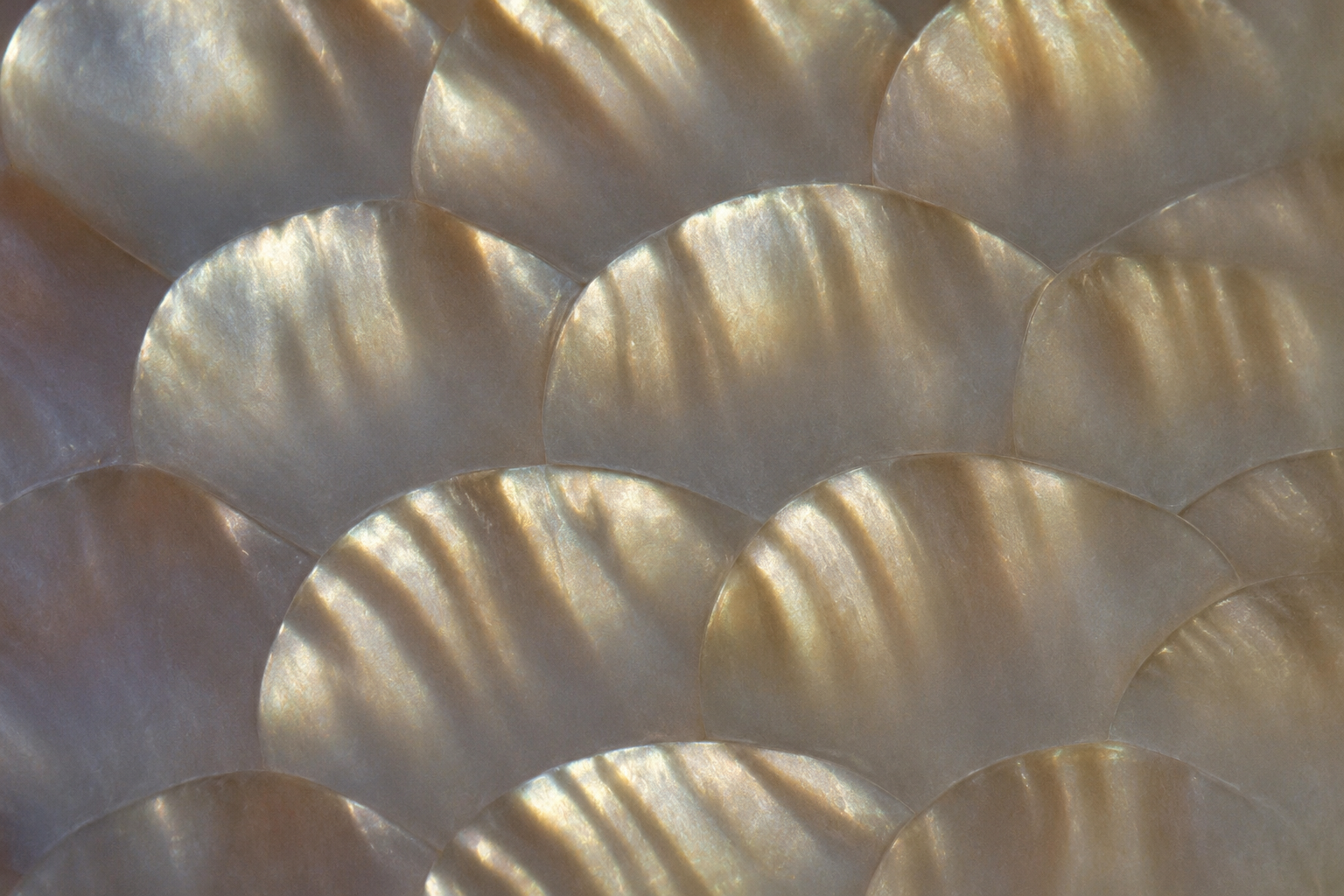
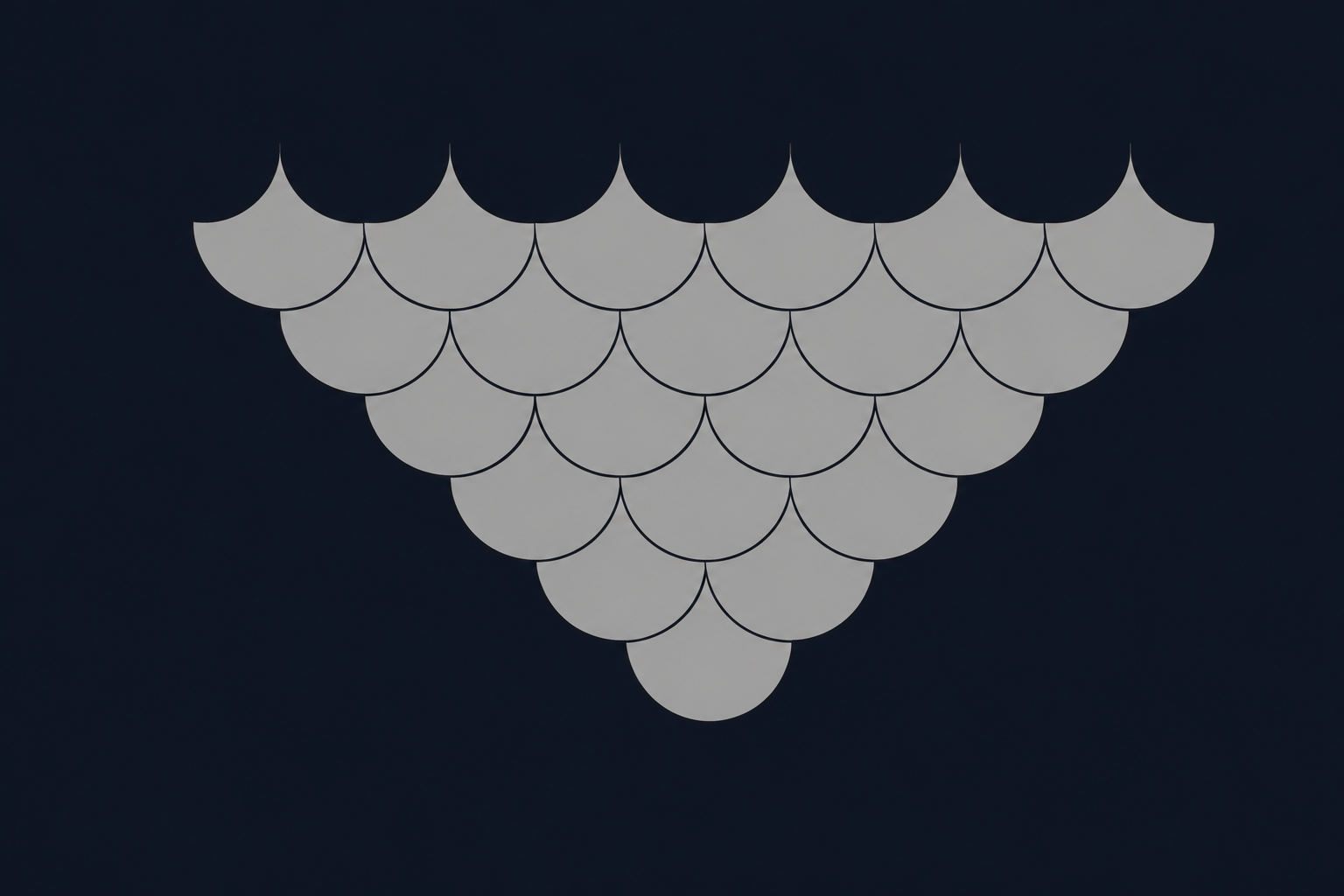
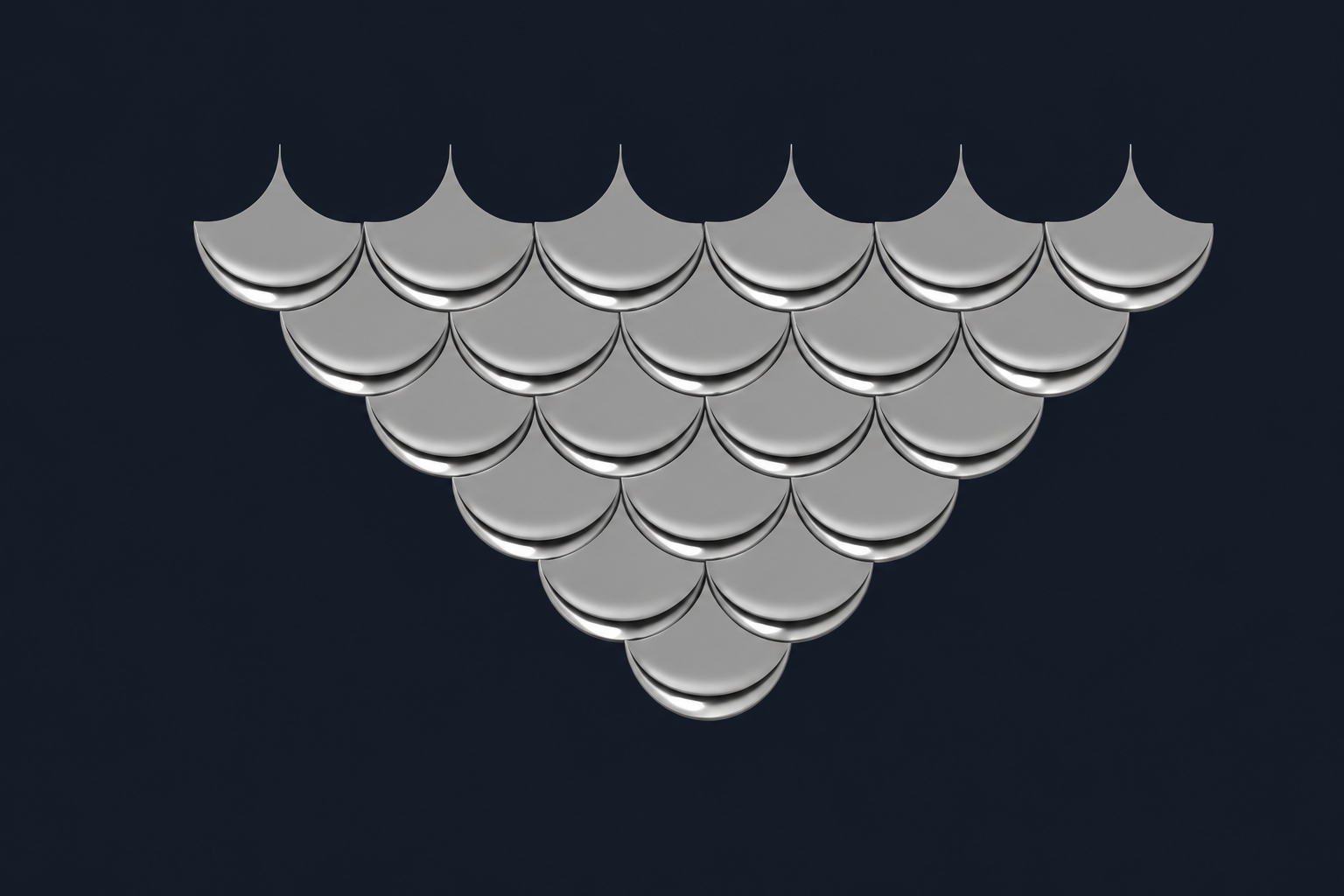
Varieties and Sub Varieties
Kinginrin Kohaku The Kinginrin Sanke.

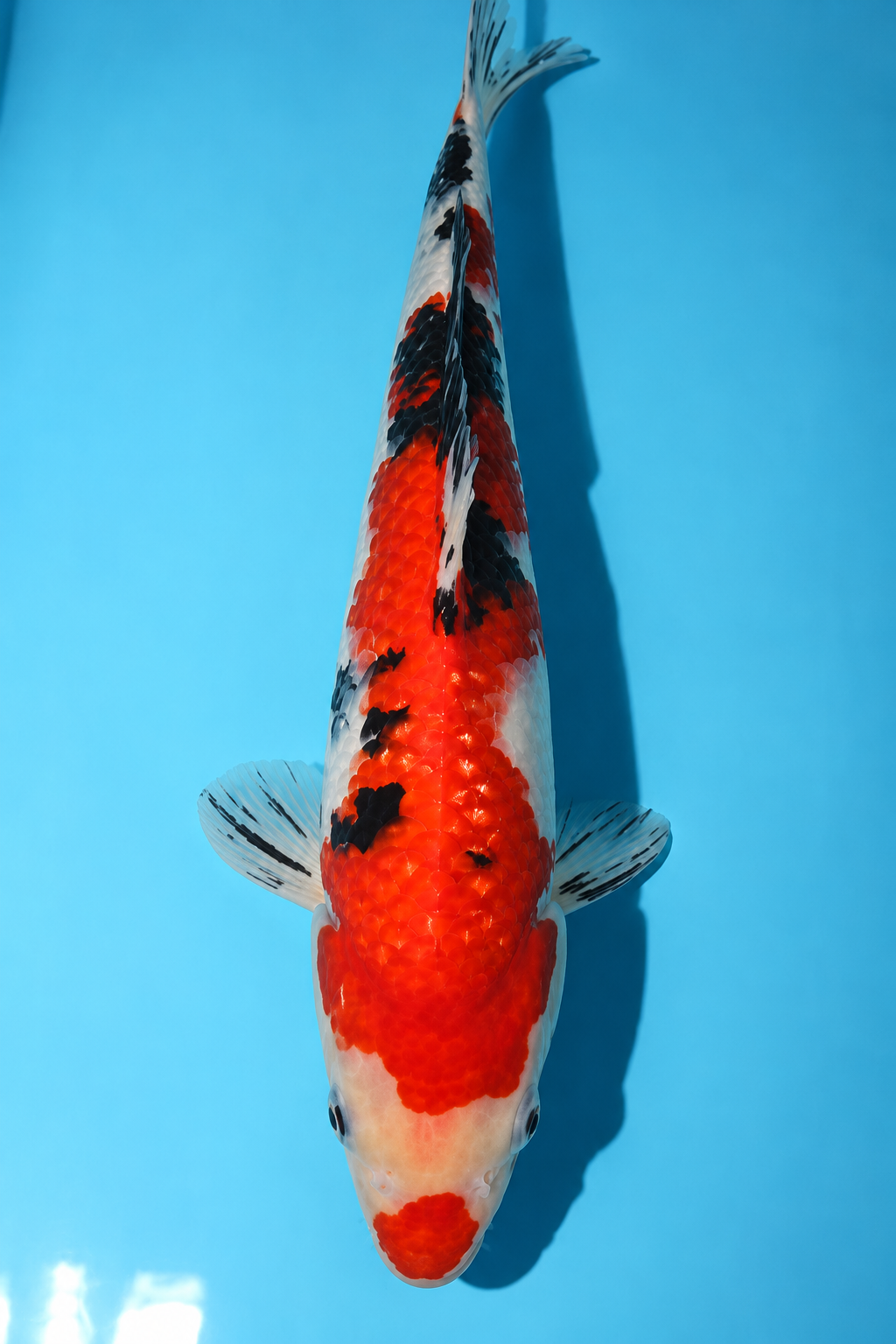
Kinginrin Showa, Kinginrin Shiro Utsuri.
Kinginrin Asagi, Kinginrin Chagoi.
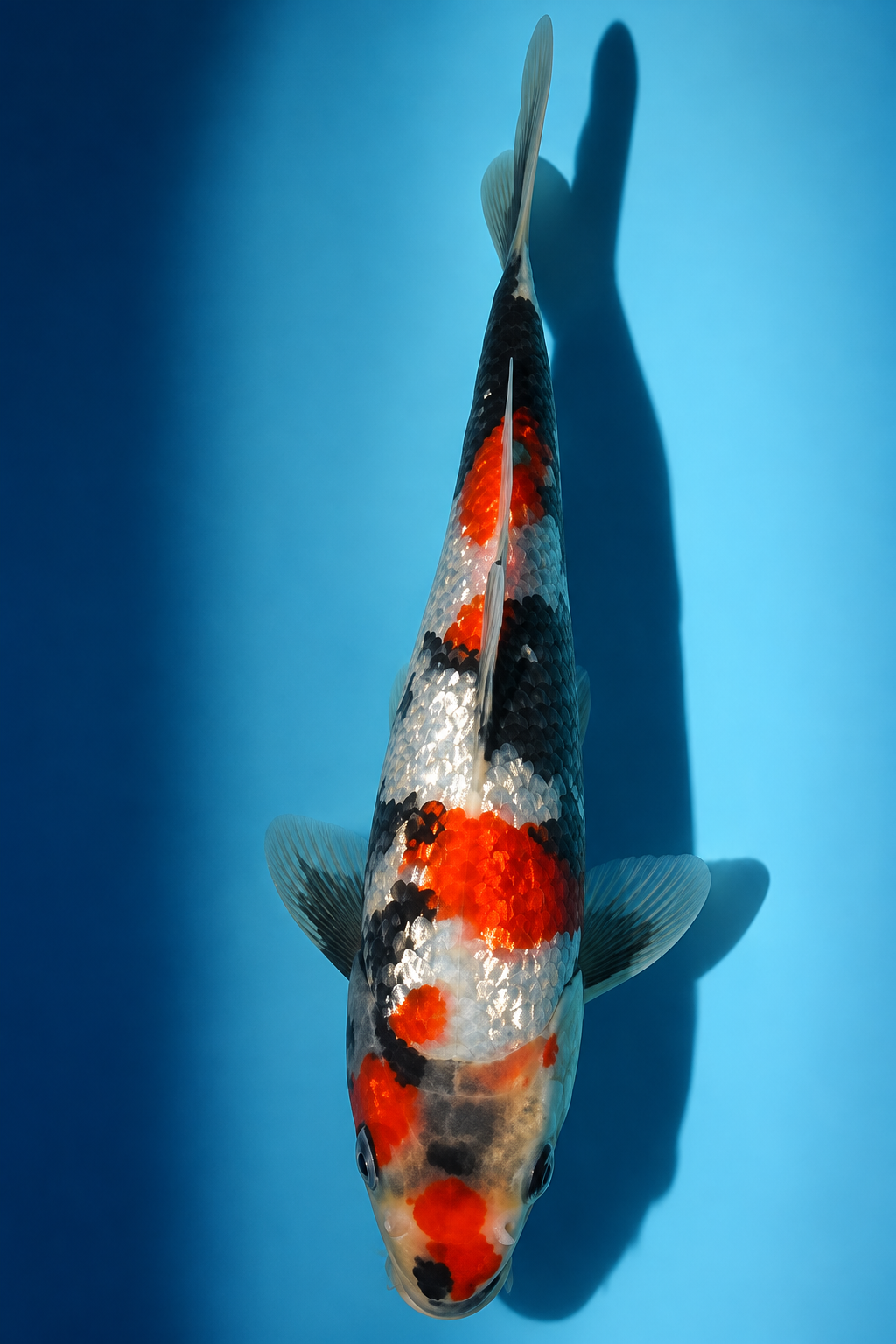
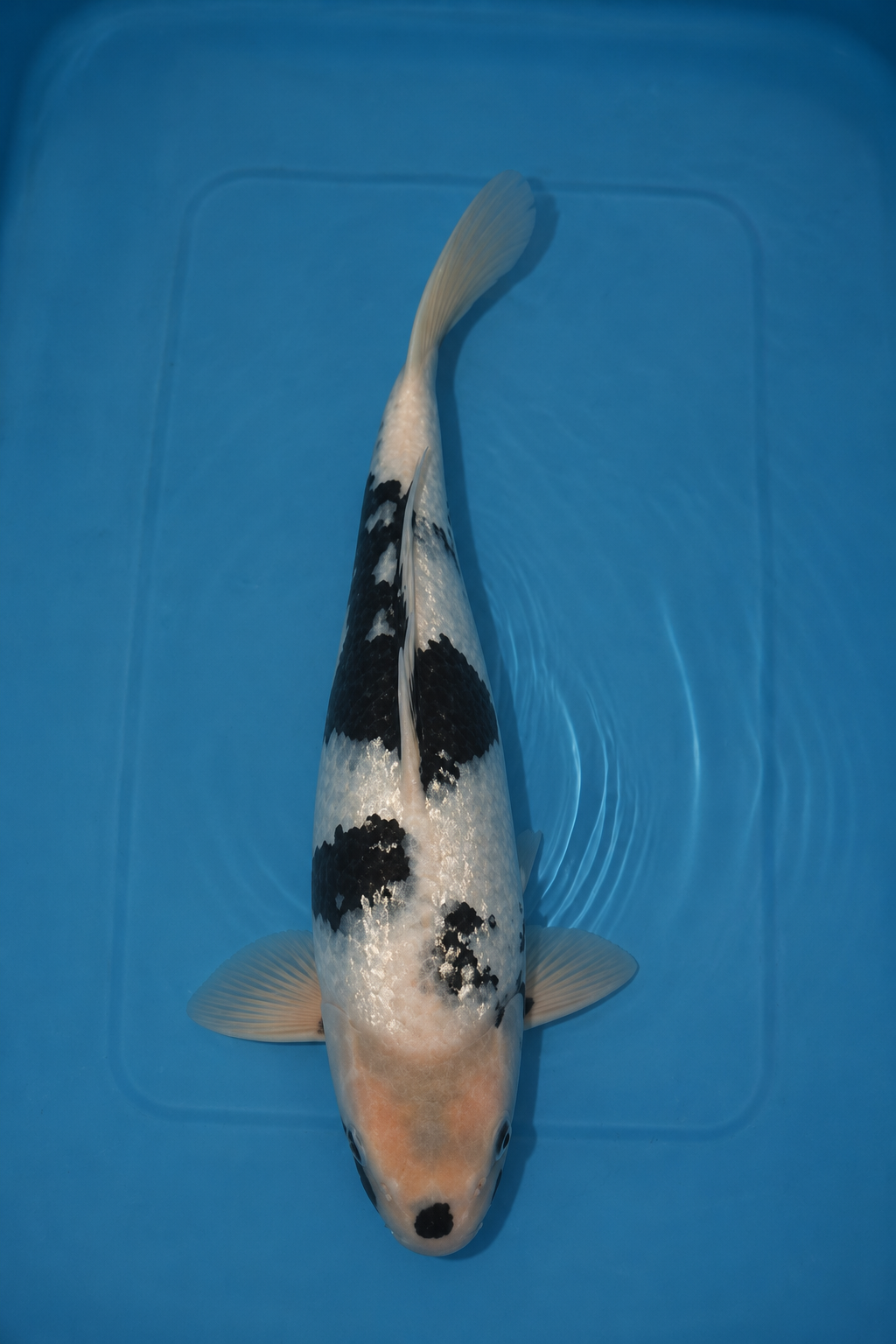
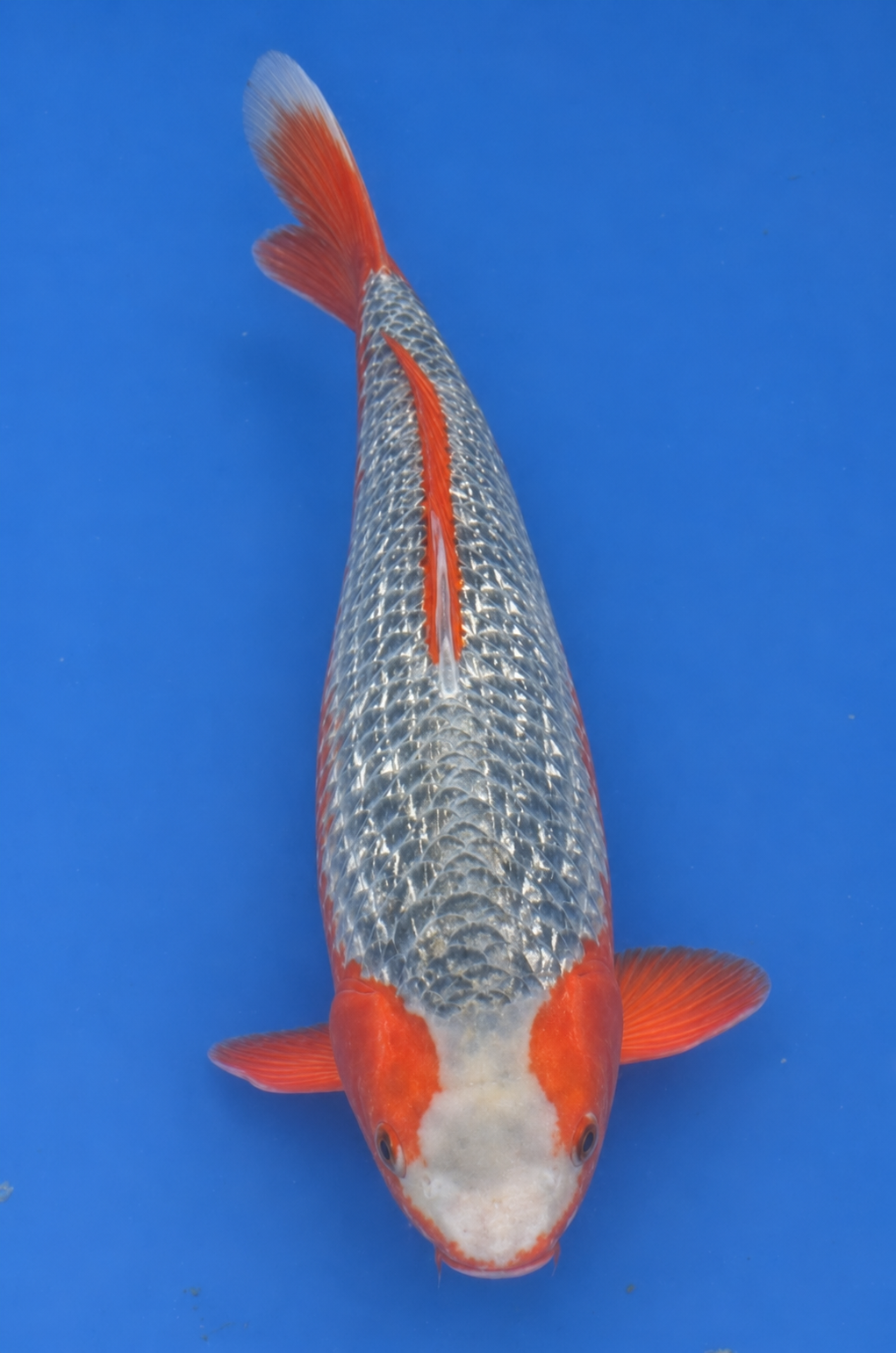
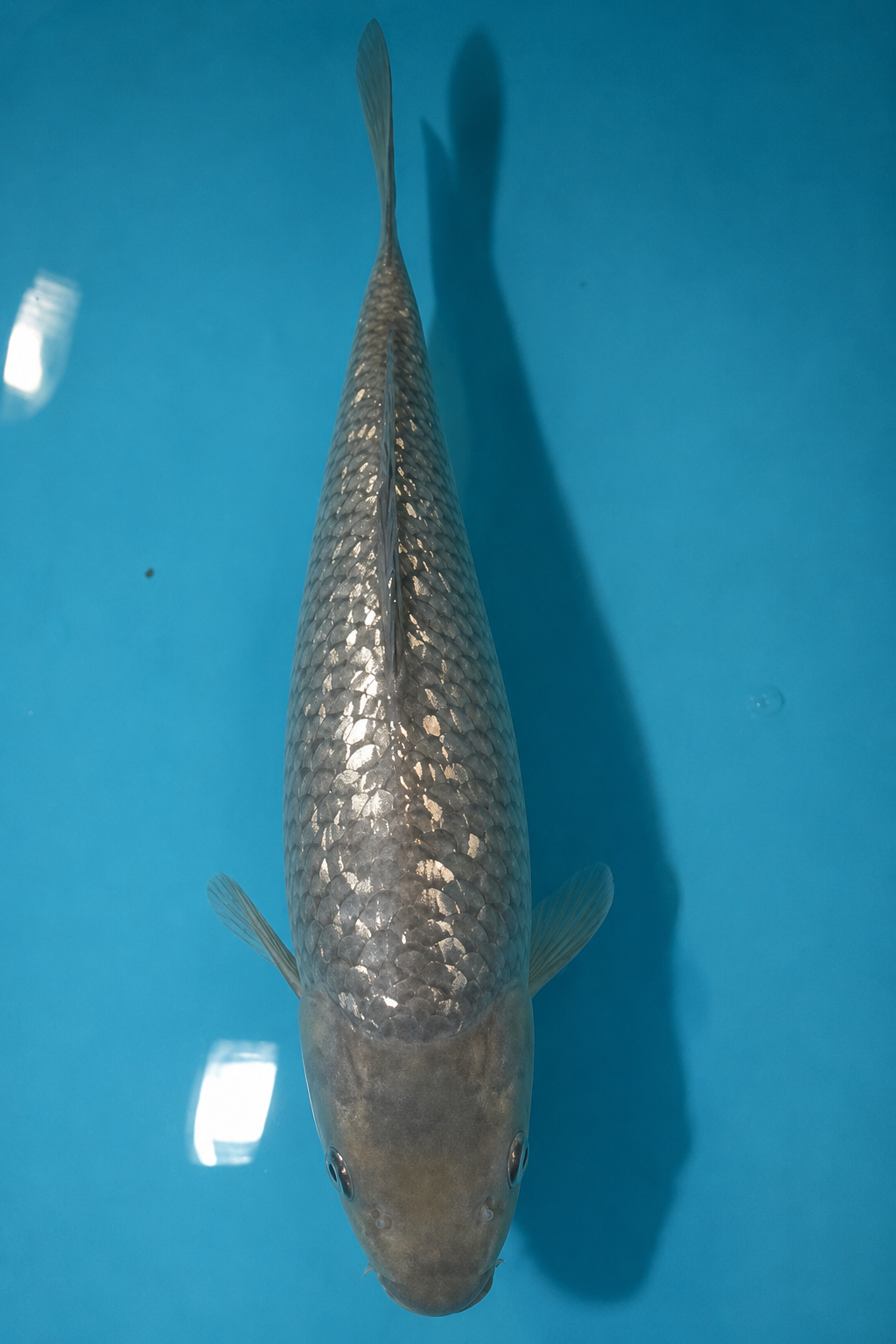
Kinginrin Ochiba Shigure.
Glossary
Kin:
Metal gold colour, like the shiny skin of a Yamabuki Ogon, the color "gold" as can be seen on a Hariwake varies from yellow to red.
Gin:
Metal silver color.
Rin:
Meaning "scaille", this word is never used alone.
Kinginrin / Ginrin :
Bright scales like diamonds, with a "gold" reflection called Kin on red and "silver" Rin on white.
Pearl Ginrin:
Kinginrin scale with only the brilliant center.
Beta-gin:
Meaning "mirror shine", it is also called Beta Gin, it appears mainly on the belly of the fish. This radiance is variable according to the angle of vision.
Diamond Ginrin:
Kinginrin scales that shine like a diamond.
Kado-gin:
Kinginrin scales of which alone, the outline is brilliant.