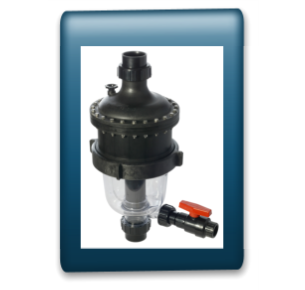
The purpose of this type of filtration is to remove or retain the largest waste in order to reduce biological filtration.
Here is a list of mechanical filters:
- The wormhole
- Brushes
- The grid filter
- Drum filter
- The paper filter
- The multi-cyclone
The wormhole
Very used in the past, vortex has become obsolete for a number of reasons:
It requires a lot of space. The principle of operation is simple: a tangentially fed circular tank allows the waste, by gravity, to settle in the bottom of the tank. To do this, the vortex must have a relatively large size, i.e. more than 1.5m in diameter.
Water cannot enter the vortex in a turbulent way, so that it is effective. To give you an idea, the largest vortex I saw had a volume of 40m3!
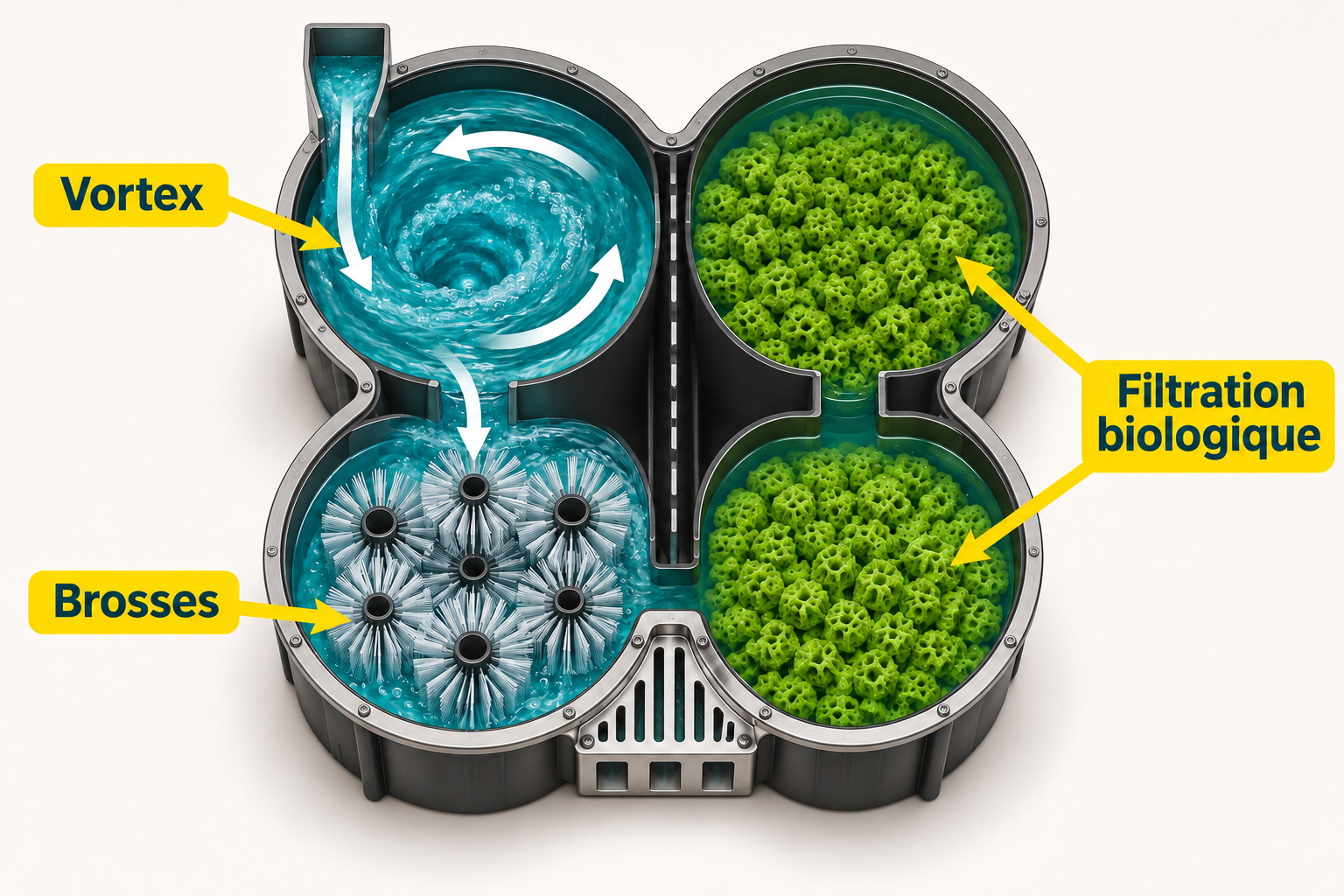
In addition, it is imperative to place a brush tank after the vortex to complete the mechanical filtration.
As you can see, the vortex and brush tank take up a lot of space!
Therefore, with the appearance of other mechanical filters, the vortex was gradually abandoned.
Brushes
Brushes are still up to date, especially with grid filters. This type of mechanical filter works in all modes.
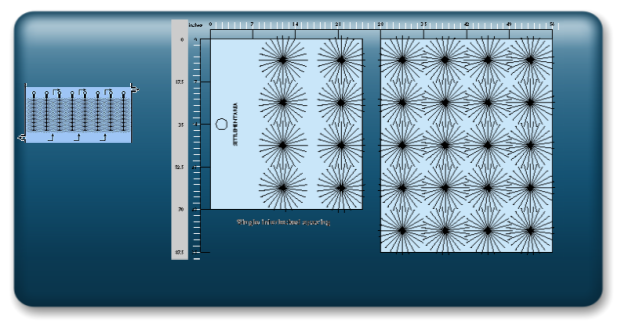
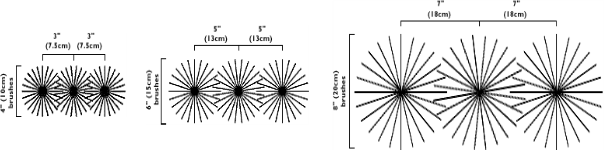
The gap between the brushes is important. The examples below show the spacing of the brushes according to their diameter.
The following example shows how to place brushes in a tank. We clearly see the overlap between brushes.
Their efficiency is no longer to be demonstrated. It is imperative to use them with a grid filter.
The grid filter
This one has marked his time. It is still current.
By eliminating large waste, it has helped to alleviate the work of biological filtration.
This type of filter works in all filtration modes. However, when purchasing it, it will be necessary to specify whether it is a gravitational mode, or semi-gravitary, or pumped.
From the beginning of the filtration line, thanks to the grid with a maximum size of 250μ, the grid filter retains all particles above 250μ.
As we have seen before, after a grid filter, a brush tank is highly recommended.
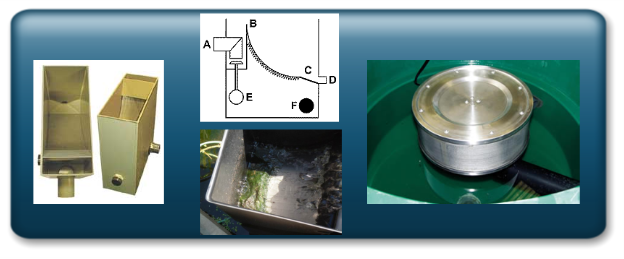
The principle is simple: water flows on a grid that filters water.
The grid filter is sometimes equipped with a float to regulate the flow, especially in the case of semi-gravity (or gravity) mode.
Disadvantages:
It needs to be cleaned every two days, so it is not suitable for long stays away from home!
In addition, waste stagnates in the bottom of the grid by bathing in water, which can lead to disease if the waste is not removed regularly.
UltraSieve Filter Animation
Drum filter
The drum filter is the mustWith a grid of 70μ in general, it offers the finest mechanical filtration.
Moreover, the waste does not stagnate in water, unlike the grid filter. This type of mechanical filter has been a great advance in mechanical filtration!
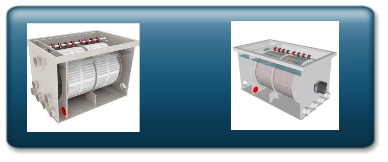
The principle of the drum filter is simple: the dirty water enters the drum and is filtered from inside the grid. When the grid is sealed, the water level increases in the tank. A level sensor detects it, rotates the drum and at the same time activates a rinse pump that cleans the grid. This results in a drop in the water level in the tank. The dirty water is removed from the filter by a pipe designed for this purpose. The ideal is to recover the water to water the garden.
This type of filter exists in stainless steel or PP (polypropylene). The important thing is that it can pass the installed maximum flow rate.
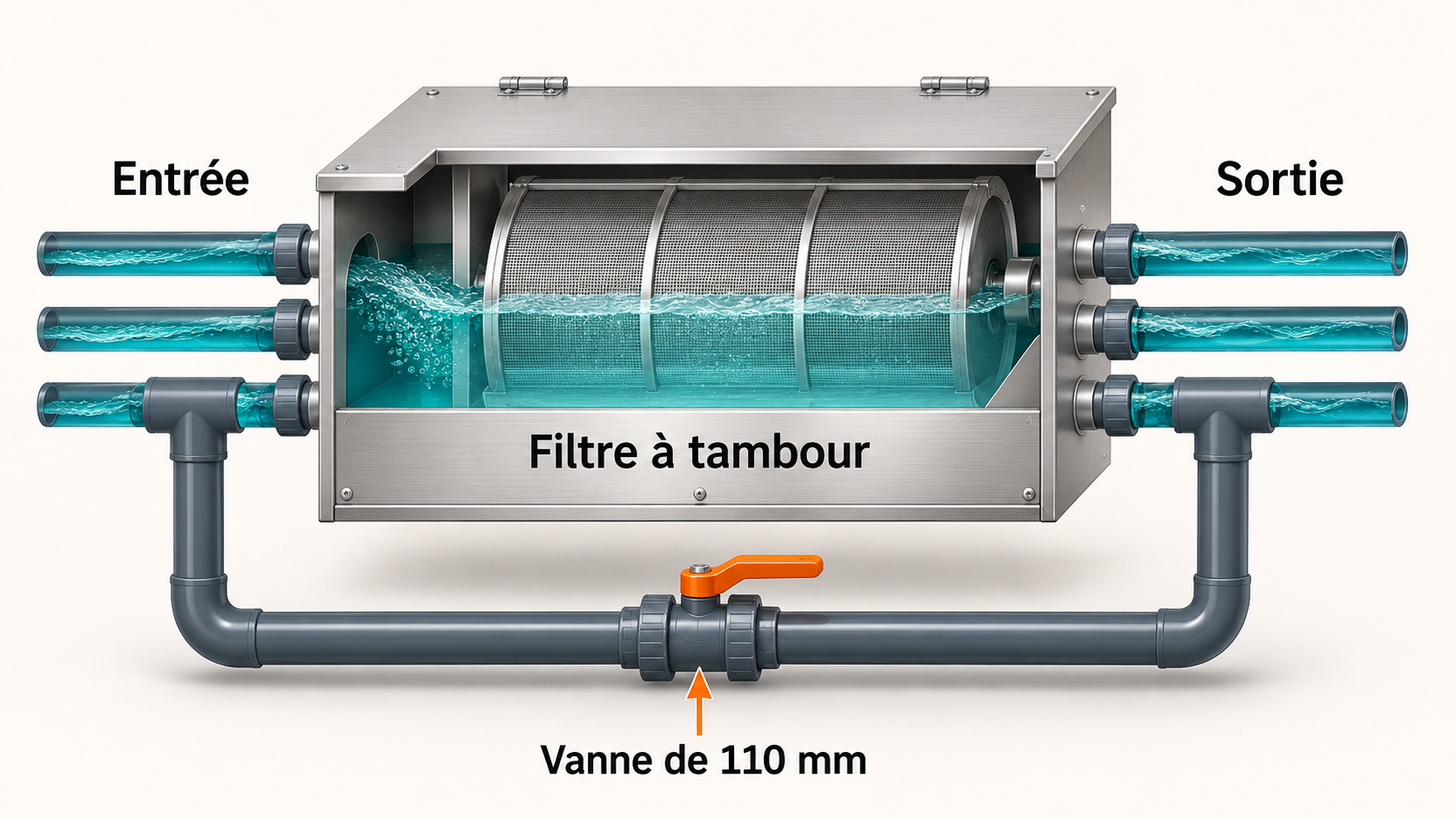
It is imperative that the drum filter be equipped with a by-pass; in case of failure, this will be a great help.
If this filter is not equipped with an integrated by-pass, you must make one with a shut-off valve. (See diagram below)
Advantage of the drum filter:
The cleaning is automatic!
Disadvantage of the drum filter:
A control electronic is often associated with it, which can cause a breakdown.
Consideration must also be given to water consumption, which contributes to the water change in the pond.
It is advisable to place a UVC inside the drum, this to avoid creating a biofilm that would increase the number of cleanings. To do so, check that a support is provided for this purpose in the drum, also ask for the maximum length of UVC to be introduced.
The power is not decisive. This UVC is placed only for the drum filter and will only play a weak role in maintaining clear water. Opt for a UVC that is as powerful as possible while respecting the length suggested by the manufacturer.
The paper filter
The characteristics of this filter are similar to the drum filter but the mechanical filtration is even finer, about 5μ, which is absolutely amazing.
However, too fine a filtration poses a problem of biological filtration. I have found large variations in the yield of biology. It is possible to solve this problem by bypassing this mechanical filter on a regular basis.
The principle is simple: as with the coffee filter, saturated paper causes water to rise in the tank. A tracer detects it and moves the paper forward.
This type of filter is expensive to buy and use because it is necessary to use the consumable paper.
With this type of mechanical filter, there are no more MES in the pond.
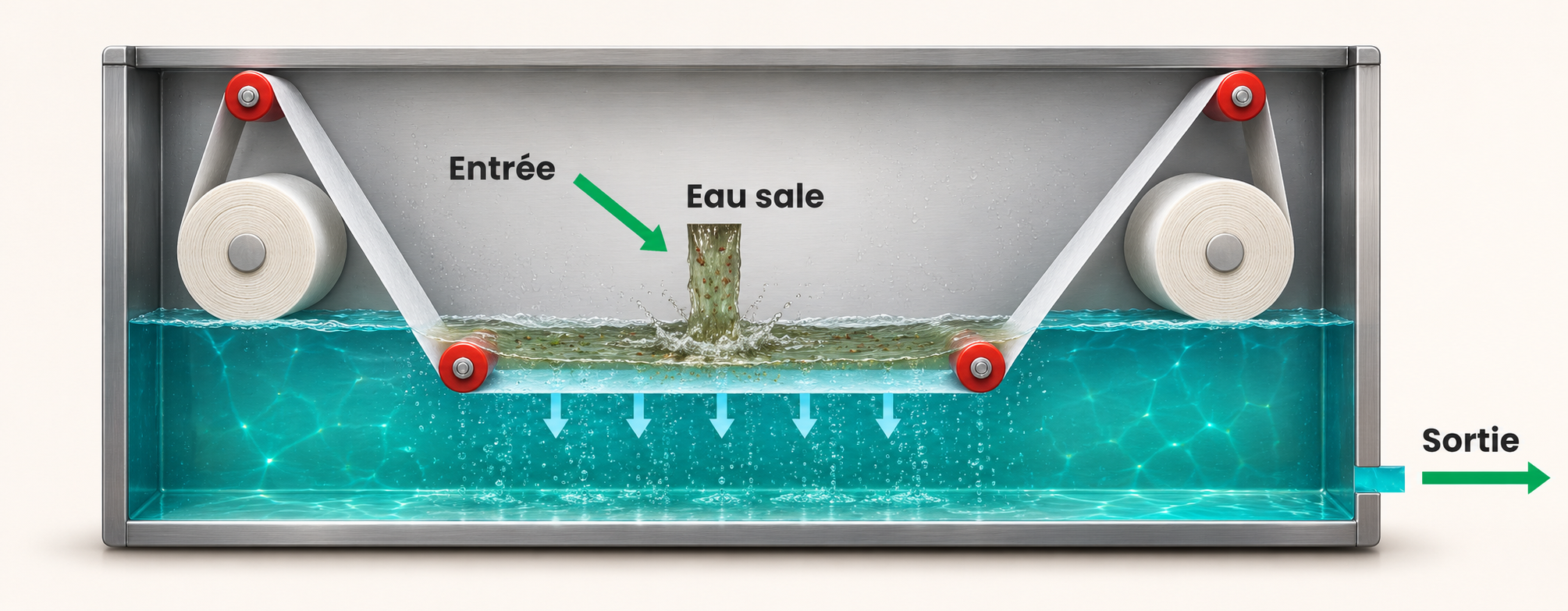
Permanent paper filter
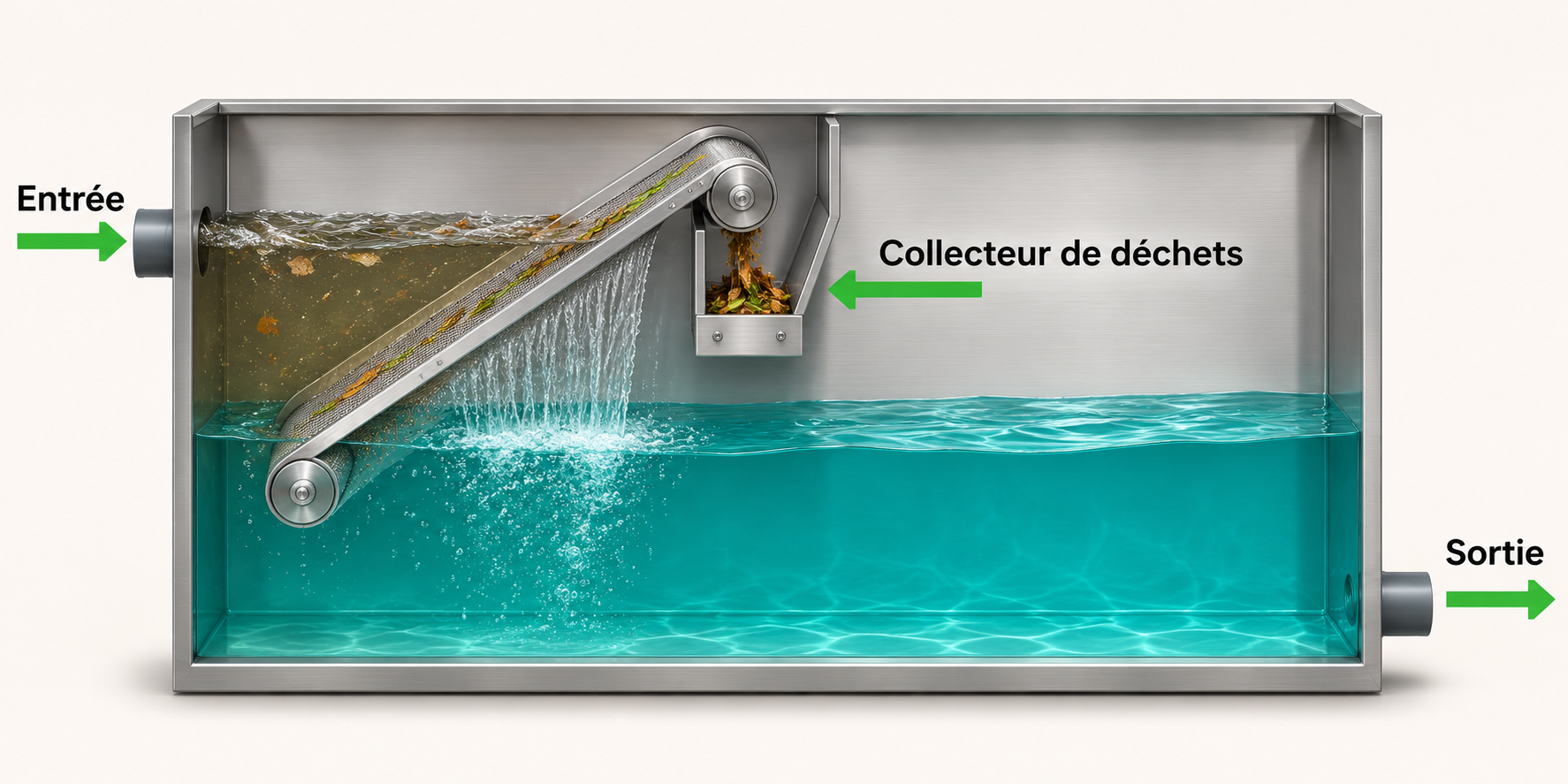
This filter has the same characteristics as the paper filter but the paper is replaced by a 60μ canvas, making the system less efficient.
He's closer to the drum filter!
The multi-cyclone
The Multi Cyclone Pro is a brilliant prefiltration device that works on the basis of water centrifugal filtration. It is designed without moving parts and without filter media to clean or replace.
This type of prefilter is often used for shower filters, "bead filters" or pressure filters.